}"}
Back to Features

Thank You Chevrolet And CMA
November 14 2024
A big THANK YOU to CHEVROLET and CMA for the Chevy Cares donation of $75,000 to the Nashville Songwriters Foundation!
That gift will provide a much-appreciated boost for our educational outreach – particularly for Nashville middle-school students in our Express Yourself songwriting program and for national viewers of our public television show, The Songwriters.
Thank you, Chevrolet, for helping us share the remarkable gift of songwriting!
To view other ways that Chevrolet supports communities across the country, visit ChevyCares.com.
}"}
Back to Features
NaSHOF Inductees By Year
August 13 2022
For more than 50 years, the Nashville Songwriters Hall of Fame has inducted the best of the best in Music City. Here’s a look at who’s been inducted year by year through 2021:
Year - Writer
1970 - Gene Autry
1970 - Johnny Bond
1970 - Albert E. Brumley
1970 - A.P. Carter
1970 - Ted Daffan
1970 - Vernon Dalhart
1970 - Rex Griffin
1970 - Stuart Hamblen
1970 - Pee Wee King
1970 - Vic McAlpin
1970 - Bob Miller
1970 - Leon Payne
1970 - Jimmie Rodgers
1970 - Fred Rose
1970 - Redd Stewart
1970 - Floyd Tillman
1970 - Merle Travis
1970 - Ernest Tubb
1970 - Cindy Walker
1970 - Hank Williams
1970 - Bob Wills
1971 - Smiley Burnette
1971 - Jenny Lou Carson
1971 - Wilf Carter
1971 - Zeke Clements
1971 - Jimmie Davis
1971 - Alton Delmore [as the team of Alton & Rabon Delmore]
1971 - Rabon Delmore [as the team of Alton & Rabon Delmore]
1971 - Al Dexter
1971 - Vaughan Horton
1971 - Bradley Kincaid
1971 - Bill Monroe
1971 - Bob Nolan
1971 - Tex Owens
1971 - Tex Ritter
1971 - Carson J. Robison
1971 - Tim Spencer
1971 - Gene Sullivan
1971 - Jimmy Wakely
1971 - Wiley Walker
1971 - Scotty Wiseman
1972 - Boudleaux Bryant [as the team of Felice & Boudleaux Bryant]
1972 - Felice Bryant [as the team of Felice & Boudleaux Bryant]
1972 - Lefty Frizzell
1972 - Jack Rhodes
1972 - Don Robertson
1973 - Jack Clement
1973 - Don Gibson
1973 - Harlan Howard
1973 - Roger Miller
1973 - Ed Nelson Jr.
1973 - Steve Nelson
1973 - Willie Nelson
1974 - Hank Cochran
1975 - Bill Anderson
1975 - Danny Dill
1975 - Eddie Miller
1975 - Marty Robbins
1975 - Wayne Walker
1975 - Marijohn Wilkin
1976 - Carl Belew
1976 - Dallas Frazier
1976 - John D. Loudermilk
1976 - Moon Mullican
1976 - Curly Putman
1976 - Mel Tillis
1977 - Johnny Cash
1977 - Woody Guthrie
1977 - Merle Haggard
1977 - Kris Kristofferson
1978 - Joe Allison
1978 - Tom T. Hall
1978 - Hank Snow
1978 - Don Wayne
1979 - Thomas A. Dorsey
1979 - Charlie Louvin [as the team of Charlie & Ira Louvin]
1979 - Ira Louvin [as the team of Charlie & Ira Louvin]
1979 - Elsie McWilliams
1979 - Joe South
1980 - Leadbelly
1980 - Mickey Newbury
1980 - Ben Peters
1980 - Ray Stevens
1981 - Bobby Braddock
1981 - Ray Whitley
1982 - Chuck Berry
1982 - Billy Hill
1983 - W.C. Handy
1983 - Loretta Lynn
1983 - Beasley Smith
1984 - Hal David
1984 - Billy Sherrill
1985 - Bob McDill
1985 - Carl Perkins
1986 - Otis Blackwell
1986 - Dolly Parton
1987 - Roy Orbison
1987 - Sonny Throckmorton
1988 - Hoagy Carmichael
1988 - Troy Seals
1989 - Rory Bourke
1989 - Maggie Cavender
1989 - Whitey Shafer
1990 - Sue Brewer
1990 - Ted Harris
1990 - Jimmy Webb
1991 - Charlie Black
1991 - Sonny Curtis
1992 - Max D. Barnes
1992 - Wayland Holyfield
1993 - Red Lane
1993 - Don Schlitz
1993 - Conway Twitty
1994 - Jerry Foster [as the team of Foster & Rice]
1994 - Buddy Holly
1994 - Richard Leigh
1994 - Bill Rice [as the team of Foster & Rice]
1994 - Bobby Russell
1995 - Waylon Jennings
1995 - Dickey Lee
1995 - Dave Loggins
1996 - Jerry Chesnut
1996 - Kenny O’Dell
1996 - Buck Owens
1996 - Norro Wilson
1997 - Wayne Carson
1997 - Roger Cook
1997 - Hank Thompson
1998 - Merle Kilgore
1998 - Eddie Rabbitt
1998 - Kent Robbins
1999 - Tommy Collins
1999 - Wayne Kemp
1999 - Doodle Owens
1999 - Glenn Sutton
2000 - Mac Davis
2000 - Randy Goodrum
2000 - Allen Reynolds
2000 - Billy Edd Wheeler
2001 - Don Everly [as the team of Don & Phil Everly]
2001 - Phil Everly [as the team of Don & Phil Everly]
2001 - Dennis Linde
2001 - Johnny Russell
2002 - Dean Dillon
2002 - Bob Dylan
2002 - Shel Silverstein
2003 - Hal Blair
2003 - Rodney Crowell
2003 - Paul Overstreet
2003 - John Prine
2004 - Guy Clark
2004 - Freddie Hart
2004 - Dennis Morgan
2004 - Billy Joe Shaver
2005 - Gary Burr
2005 - Vince Gill
2005 - Roger Murrah
2005 - Jerry Reed
2005 - Mike Reid
2006 - Jimmy Buffett
2006 - Hugh Prestwood
2006 - Jim Weatherly
2007 - Bob DiPiero
2007 - Lester Flatt [as the team of Lester Flatt & Earl Scruggs]
2007 - Mac McAnally
2007 - Dottie Rambo
2007 - Earl Scruggs [as the team of Lester Flatt & Earl Scruggs]
2007 - Hank Williams, Jr.
2008 - Matraca Berg
2008 - John Hiatt
2008 - Tom Shapiro
2009 - Kye Fleming
2009 - Mark D. Sanders
2009 - Tammy Wynette
2010 - Pat Alger
2010 - Steve Cropper
2010 - Paul Davis
2010 - Stephen Foster
2011 - John Bettis
2011 - Garth Brooks
2011 - Alan Jackson
2011 - Thom Schuyler
2011 - Allen Shamblin
2012 - Tony Arata
2012 - Mary Chapin Carpenter
2012 - Larry Henley
2012 - Kim Williams
2013 - Will Jennings
2013 - Layng Martine Jr.
2013 - Randy Owen
2013 - Jeffrey Steele
2014 - John Anderson
2014 - Paul Craft
2014 - Tom Douglas
2014 - Gretchen Peters
2015 - Rosanne Cash
2015 - Mark James
2015 - Even Stevens
2015 - Craig Wiseman
2016 - Aaron Barker
2016 - Beth Nielsen Chapman
2016 - Bob Morrison
2016 - Townes Van Zandt
2017 - Walt Aldridge
2017 - Dewayne Blackwell
2017 - Vern Gosdin
2017 - Jim McBride
2017 - Tim Nichols
2018 - Ronnie Dunn
2018 - Byron Hill
2018 - Wayne Kirkpatrick
2018 - Joe Melson
2018 - K.T. Oslin
2019 - Larry Gatlin
2019 - Marcus Hummon
2019 - Kostas
2019 - Rivers Rutherford
2019 - Sharon Vaughn
2019 - Dwight Yoakam
2020 - Kent Blazy
2020 - Steve Earle
2020 - Bobbie Gentry
2020 - Brett James
2020 - Spooner Oldham
2021 - Rhett Akins
2021 - Buddy Cannon
2021 - Amy Grant
2021 - Toby Keith
2021 - John Scott Sherrill
2022 - Hillary Lindsey
2022 - David Malloy
2022 - Chips Moman
2022 - Gary Nicholson
2022 - Shania Twain
2022 - Steve Wariner
2023 - Casey Beathard
2023 - Kix Brooks
2023 - John Jarrard
2023 - David Lee Murphy
2023 - Keith Urban
2023 - Rafe Van Hoy
2024 - Al Anderson
2024 - David Bellamy
2024 - Dan Penn
2024 - Liz Rose
2024 - Victoria Shaw
2024 - Tony Joe White
}"}
Back to Features
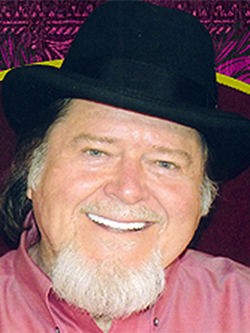
Interview with Dallas Frazier
January 25 2022
You’ll find this compelling conversation here.
Dallas Frazier was a giant among Nashville songwriters. His song “There Goes My Everything” by Jack Greene earned the CMA’s first Song of the Year and Single of the Year awards in 1967. “Elvira” by The Oak Ridge Boys was Single of the Year for both the ACM and the CMA in 1981. He was inducted into the Hall of Fame 46 years ago in 1976 – a mere six years after it began. As we mourn his passing, we look back fondly to 2014, as Dallas reflected upon his life and career in an interview with NaSHOF’s Ken Paulson. You’ll find that compelling conversation here.
}"}
Back to Features
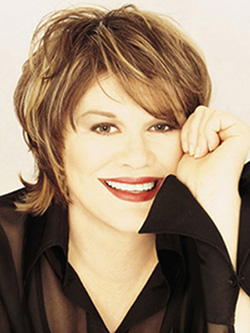
Highlights from The Songwriters public television series: K.T. Oslin
December 22 2020
Take a look at The Songwriters -- You’ll find this compelling conversation here. Take note: the show’s queue signal (a loud tone) will sound during the first 14 seconds.
If you’ve not yet seen The Songwriters on your local public television station, here’s your opportunity to take a peek.
The Songwriters is a half-hour interview show featuring engaging behind-the-scenes conversations with members of the Nashville Songwriters Hall of Fame (NaSHOF). Filmed in Nashville, the show is hosted by Ken Paulson, Director of the Free Speech Center at Middle Tennessee State University (MTSU). The series is produced by the Nashville Songwriters Hall of Fame (NaSHOF) in conjunction with MTSU.
Underwriting for the series is graciously provided by ASCAP, BMI and The Don Gibson American Music Foundation.
}"}
Back to Features
Hall of Fame Announces Class of 2020
November 02 2020
Steve Earle, Bobbie Gentry, Kent Blazy, Brett James and Spooner Oldham have been elected to the Nashville Songwriters Hall of Fame, according to an announcement made today by Sarah Cates, chair of the organization’s board of directors.
The five new inductees-elect – who next year will join 219 of their previously named colleagues in the elite organization – will be officially inducted during the “50-51” edition of the Nashville Songwriters Hall of Fame Gala on Monday, November 1, 2021, at the Music City Center. The Class of 2020 will join the yet-to-be named Class of 2021 to celebrate the 50th and 51st anniversaries of the event, which was postponed this year because of the ongoing health crisis.
“This year marks our 50th year to welcome a new class into the Nashville Songwriters Hall of Fame. And although our year has looked different, we couldn’t be more excited to continue our commitment and core mission by announcing the Nashville Songwriters Hall of Fame Class of 2020,” says Cates. “It’s our great honor today to welcome our class of 2020: Kent Blazy and Brett James in the songwriter category; Spooner Oldham in the veteran songwriter category, Steve Earle as our songwriter/artist and Bobbie Gentry as our veteran songwriter/artist.”
Kentucky native Kent Blazy’s songwriter credits include “If Tomorrow Never Comes” (Garth Brooks), “Ain’t Goin’ Down (’Til The Sun Comes Up)” (Garth Brooks) and “Gettin’ You Home (The Black Dress Song)” (Chris Young).
Artist/songwriter Brett James’ resume is known for “Jesus Take The Wheel” (Carrie Underwood), “When The Sun Goes Down” (Kenny Chesney & Uncle Kracker) and “Summer Nights” (Rascal Flatts).
Rock and Roll Hall of Fame member Spooner Oldham is the writer of R&B and Pop hits such as “I’m Your Puppet” (James & Bobby Purify), “Cry Like A Baby” (The Box Tops) and “Sweet Inspiration” (The Sweet Inspirations).
Multiple Grammy Award winner Steve Earle recorded many of his self-penned hits, including “Guitar Town,” “Copperhead Road” and “The Devil’s Right Hand.”
Artist/songwriter/producer Bobbie Gentry popularized many of her own compositions such as the oft-recorded smash “Ode To Billie Joe,” “Fancy” and “Mornin’ Glory.”
Inductee Biographical Information
Kent Blazy grew up in Lexington, Kentucky, playing in various local bands. By the mid-’70s, he was touring as a guitar player for Canadian legend Ian Tyson. After a first-place win in a national songwriting competition, Kent decided to make the move to Nashville. In 1982, Gary Morris sent Kent’s “Headed For A Heartache” to #5 on the Country chart. Soon after, other cuts followed with The Forester Sisters, T. Graham Brown, Donna Fargo and Moe Bandy. In 1987, Kent was introduced to new demo singer Garth Brooks. The two began writing together, and their first collaboration, “If Tomorrow Never Comes,” became Brooks’ first #1 single and NSAI’s 1989 Song of the Year. Their writing partnership yielded four additional Top 5 songs with “Ain’t Goin’ Down (’Til The Sun Comes Up),” “Somewhere Other Than The Night,” “It’s Midnight Cinderella” and “She’s Gonna Make It.” Kent also was a co-writer on the Brooks & George Jones duet “Beer Run,” as well as on “That’s What I Get For Lovin’ You” by Diamond Rio, “My Best Days Are Ahead Of Me” by American Idol finalist Danny Gokey and “Gettin’ You Home (The Black Dress Song)” by Chris Young.
Midway through medical school, Oklahoma City native Brett James left college to pursue music in Nashville. After several years as an Arista/Career recording artist, he continued writing for others, scoring early cuts by Billy Ray Cyrus, Kenny Chesney and Martina McBride. In 2001, “Who I Am” by Jessica Andrews became Brett’s first #1 hit. In 2006, the chart-topping “Jesus Take The Wheel” by Carrie Underwood earned the 2006 Grammy for Best Country Song, as well as the 2005 ACM Single of the Year, the 2006 ASCAP Country Song of the Year and the 2006 NSAI Song of the Year. Now with more than 300 major-label cuts, Brett’s catalogue includes hits such as “When The Sun Goes Down” by Kenny Chesney & Uncle Kracker, “Cowboy Casanova” by Carrie Underwood, “It’s America” by Rodney Atkins, “Out Last Night” by Kenny Chesney, “Summer Nights” by Rascal Flatts, “The Man I Want To Be” by Chris Young and “Bottoms Up” by Brantley Gilbert. Brett also has a Top 5 Latin hit with “The One You Love (Todo Mi Amor)” by Paulina Rubio. Brett was named ASCAP Country Songwriter of the Year in 2006 and 2010. In 2020, he released a new self-written album titled I Am Now.
Center Star, Alabama, native Dewey Lindon “Spooner” Oldham started off in Muscle Shoals as a session keyboardist before moving to Memphis in the mid-1960s. It was there that he formed a songwriting partnership with Vernon, Alabama, native Dan Penn, who also had cut his musical teeth in Muscle Shoals. As a duo, Oldham & Penn created many often-recorded R&B and Pop hits such as “I’m Your Puppet” by James & Bobby Purify, “It Tears Me Up” and “Out Of Left Field” by Percy Sledge, “Cry Like A Baby” by The Box Tops, “Sweet Inspiration” by The Sweet Inspirations, “I Worship The Ground You Walk On” by Jimmy Hughes, “Take Me (Just As I Am)” by Solomon Burke and “Up Tight, Good Man” by Laura Lee. Outside the duo, Spooner’s catalog includes songs such as “Lonely Women Make Good Lovers” — a Country hit for both Bob Luman and Steve Wariner — and “Another Night Of Love” for Freddy Weller. In addition to songwriting, Spooner has played keyboards in sessions and on the road for artists such as Neil Young, Bob Dylan, Joe Cocker, Linda Ronstadt, Jackson Browne, Dickey Betts and many others. Spooner was inducted into the Rock and Roll Hall of Fame in the “sideman” category in 2009.
Steve Earle grew up in San Antonio, Texas, where he began playing guitar at age 11. Dropping out of school at age 16, he moved to Houston. Then in 1974, Steve moved to Nashville, where he worked blue-collar jobs by day and played music by night before landing a gig playing bass in Guy Clark’s band. Ever restless, Steve formed his own band, The Dukes, in 1982 — the same year that Johnny Lee took Steve’s self-penned “When You Fall In Love” into the Top 20. Moving on from his previous publishing- and record- deals, Steve released his first full-length album on MCA in 1986. The title track, “Guitar Town,” reached the Top 10 that year, followed by another Top 10, “Goodbye’s All We’ve Got Left,” the next year. In 1987, Steve’s “I Ain’t Ever Satisfied” reached #26 on the Rock chart. In 1988 – the year Patty Loveless reached #2 with Steve’s “A Little Bit In Love” – he hit #10 on the Rock chart with “Copperhead Road,” the title track of his landmark album. Other classic songs from Steve’s pen include “My Old Friend The Blues” (also recorded by T. Graham Brown, Joe Nichols, The Grascals), “Nothing But A Child” (also recorded by Nicolette Larson, Kathy Mattea, Lee Ann Womack), “The Devil’s Right Hand” (also recorded by Waylon Jennings, Johnny Cash, Bob Seger) and Miranda Lambert’s Top 20 hit “Kerosene.”
Born Roberta Lee Streeter near Woodland, Mississippi, Bobbie Gentry was raised on her grandparents’ farm following the divorce of her parents. At age seven, she composed her first song and began teaching herself to play a variety of instruments. At 13 she moved to California to live with her mother. Following high school, Bobbie entered UCLA as a philosophy major. During that time, she began performing occasionally at nightclubs before signing with Capitol Records several years later. In 1967 Bobbie released her first single, “Mississippi Delta,” however, it was the flipside, “Ode To Billie Joe,” that became a worldwide smash. (That single was inducted into the Grammy Hall of Fame in 1999.) After the release of her follow-up “Okolona River Bottom Band,” Bobbie scored another hit single with her self-penned “Fancy” (which would also become a hit years later for Reba McEntire). Bobbie wrote and performed other hits into the mid-1970s, including “Mornin’ Glory” (a duet with Glen Campbell) and “But I Can’t Get Back.” In 1968-71, Bobbie had her own TV series on the BBC in the U.K. She later produced, choreographed, and wrote/arranged the music for her own nightclub revue in Las Vegas before retiring from show business in the early 1980s.
}"}
Back to Features
2020 Nominees for the Nashville Songwriters Hall of Fame Announced
September 04 2020
Twelve exemplary tunesmiths are 2020 nominees for the Nashville Songwriters Hall of Fame (NaSHOF) – eight in the Songwriters category and four in the Songwriter/Artists category.
This year’s nominees in the Songwriters category are:
Kent Blazy
Shawn Camp
Don Henry
Brett James
Tony Martin
Steve Seskin
Tia Sillers
George Teren
The nominees in the Songwriter/Artists category are:
Kix Brooks
Steven Curtis Chapman
Steve Earle
Phil Vassar
All nominees experienced their first significant (Top 20) songs at least 20 years ago. Two songwriters and one songwriter/artist will be elected in these categories by their professional songwriter peers.
The three will be joined by two more. A separate body of veteran voters will elect a veteran songwriter and a veteran songwriter/artist, both of whom experienced their first significant (Top 20) songs at least 30 years ago. As part of that process, nominees in those categories are not announced.
The five inductees-elect are typically honored at the organization’s annual Gala, where they are officially inducted into the Hall of Fame; however, because of the current health climate, the 2020 event has been rescheduled to 2021. This year’s class will be honored alongside the Class of 2021 in a special double-sized Gala next fall. Details on the 2021 event will be forthcoming.
Congratulations to all!
ABOUT THE NASHVILLE SONGWRITERS HALL OF FAME 2020 NOMINEES:
Category 1 - SONGWRITERS
KENT BLAZY
Kent Blazy grew up in Lexington, Kentucky, playing in various local bands. By the mid-’70s, he was touring as a guitar player for Canadian legend Ian Tyson. After a first-place win in a national songwriting competition, Kent decided to make the move to Nashville. In 1982, Gary Morris sent Kent’s “Headed For A Heartache” to #5 on the Country chart. Soon after, other cuts followed with The Forester Sisters, T. Graham Brown, Donna Fargo and Moe Bandy. In 1987, Kent was introduced to new demo singer Garth Brooks. The two began writing together, and their first collaboration, “If Tomorrow Never Comes,” became Brooks’ first #1 single and NSAI’s 1989 Song of the Year. Their writing partnership yielded four additional Top 5 songs with “Ain’t Goin’ Down (’Til The Sun Comes Up),” “Somewhere Other Than The Night,” “It’s Midnight Cinderella” and “She’s Gonna Make It.” Kent also was a co-writer on the Brooks & George Jones duet “Beer Run,” as well as on “That’s What I Get For Lovin’ You” by Diamond Rio, “My Best Days Are Ahead Of Me” by American Idol finalist Danny Gokey and “Gettin’ You Home (The Black Dress Song)” by Chris Young.
SHAWN CAMP
Shawn Camp grew up on a farm outside of Perryville, Arkansas. Through both parents, who sang and played guitar, he was infuseed with a love of music. Shawn picked up a guitar at age five and by age 20 had moved to Nashville, where he found work in the late ’80s as a fiddle player in backing bands for The Osborne Brothers, Jerry Reed, Alan Jackson and Trisha Yearwood. After charting a pair of self-penned singles in 1993 as a recording artist on Warner Bros. Records (“Fallin’ Never Felt So Good” and “Confessin’ My Love”), Shawn turned his attention to writing songs — earning his first #1 hits in 1998 with “Two Piña Coladas” by Garth Brooks and “How Long Gone” by Brooks & Dunn. In 2006, he had Top 5 singles with “Nobody But Me” by Blake Shelton and “Would You Go With Me” by Josh Turner. Shawn also co-wrote Turner’s “Firecracker,” as well as “River Of Love” by George Strait and “Love Done Gone” by Billy Currington. Shawn’s songs have been recorded by many Bluegrass artists. Additionally, he is a member of the award-winning band The Earls of Leicester, a three-time Bluegrass Entertainer of the Year honoree.
DON HENRY
California native Don Henry began writing songs at age 13. By the late 1970s, he was ready to give Nashville a try. His early success came from cuts by T.G. Sheppard and John Conlee, who singled “Blue Highway.” Conlee also recorded “Class Reunion,” as did The Oak Ridge Boys, Gene Watson and Ray Charles. Kathy Mattea has recorded a several of Don’s songs, including “Beautiful Fool,” “Whole Lotta Holes,” and the heart-wrenching “Where’ve You Been.” Also recorded by Patti Page and Dailey & Vincent, that song earned 1990’s Grammy for Best Country Song, as well as the 1989 ACM Song of the Year, the 1990 CMA Song of the Year and the 1990 NSAI Song of the Year. In 1993 Don released a critically acclaimed album on Sony Records titled Wild In the Backyard. Many of those songs, such as “Harley” and “Mr. God” have become staples in his solo acoustic performance repertoire. Among other hits from Don’s catalogue are “Heart Vs. Heart” by Pake McEntire, “Has Anybody Seen Amy?” by John & Audrey Wiggins and “All Kinds Of Kinds” by Miranda Lambert. Don also records and performs in the duo The Don Juans.
BRETT JAMES
Midway through medical school, Oklahoma City native Brett James left college to pursue music in Nashville. After several years as an Arista/Career recording artist, he continued writing for others, scoring early cuts by Billy Ray Cyrus, Kenny Chesney and Martina McBride. In 2001, “Who I Am” by Jessica Andrews became Brett’s first #1 hit. In 2006, the chart-topping “Jesus Take The Wheel” by Carrie Underwood earned the 2006 Grammy for Best Country Song, as well as the 2005 ACM Single of the Year, the 2006 ASCAP Country Song of the Year and the 2006 NSAI Song of the Year. Now with more than 300 major-label cuts, Brett’s catalogue includes hits such as “When The Sun Goes Down” by Kenny Chesney & Uncle Kracker, “Cowboy Casanova” by Carrie Underwood, “It’s America” by Rodney Atkins, “Out Last Night” by Kenny Chesney, “Summer Nights” by Rascal Flatts, “The Man I Want To Be” by Chris Young and “Bottoms Up” by Brantley Gilbert. Brett also has a Top 5 Latin hit with “The One You Love (Todo Mi Amor)” by Paulina Rubio. Brett was named ASCAP Country Songwriter of the Year in 2006 and 2010.In 2020, he released a new self-written album titled I Am Now.
TONY MARTIN
Born in Georgia and raised in Nashville, Tony Martin has been around Country songwriting his entire life. The son of classic Country composer Glenn Martin, Tony grew up at the feet of other stellar songwriters such as Sonny Throckmorton, Mickey Newbury and Hank Cochran. During his time as a journalist for a Chicago newspaper, Tony was writing parody songs for fun when his father urged him to take his talent more seriously. On his 10th attempt, Tony wrote “Baby’s Gotten Good At Goodbye,” which his father successfully pitched to George Strait. The song proved to be the dream scenario for a songwriter. It was Tony’s first demo, first cut, first single, first hit and first #1. Since that time, Tony has added more chart-topping hits to his resume. Among those are “Banjo” by Rascal Flatts, “I’ll Think Of A Reason Later” by Lee Ann Womack, “Just To See You Smile” by Tim McGraw, “Living And Living Well” by George Strait, “No Place That Far” by Sara Evans, “Settle For A Slow Down” by Dierks Bentley, “Third Rock From The Sun” by Joe Diffie, “Time Is Love” by Josh Turner and “You Look Good In My Shirt” by Keith Urban.
STEVE SESKIN
New York-born Steve Seskin began his songwriting career when he moved to San Francisco in 1972. Upon the advice of Crystal Gayle, Steve visited Nashville in 1985 and began co-writing. He first hit the Country chart in 1990 with “Wrong” by Waylon Jennings. He has enjoyed particular success with both John Michael Montgomery (“Life’s A Dance,” “If You’ve Got Love,” “No Man’s Land”) and Neal McCoy (“No Doubt About It” and “For A Change”). His “Don’t Laugh At Me” by Mark Wills was named the 1998 NSAI Song of the Year. The version by Peter, Paul and Mary became the impetus for the Operation Respect/Don’t Laugh at Me project, a curriculum designed to teach tolerance in schools. Other Steve Seskin hits include “Daddy’s Money” by Ricochet, the Grammy-nominated “Grown Men Don’t Cry” by Tim McGraw and “I Think About You” by Collin Raye. That song’s video was named the ACM 1997 Video of the Year, while the song and video were awarded by the Tennessee Task Force Against Domestic Violence. A successful performer and recording artist on his own, Steve has recorded numerous CDs for his own label. He divides his time among Nashville, Northern California and touring.
TIA SILLERS
Growing up in Nashville, Tia Sillers became hooked on songwriting as a high-school student when she attended her first songwriters round. Years later her first publishing deal yielded “Lipstick Promises” by George Ducas in 1995. Also that year, Kenny Wayne Shepherd made Tia’s “Deja Voodoo” a Top 10 Rock hit. Three years later, Shepherd delivered a #1 Rock hit with “Blue On Black,” which earned the 1998 Billboard Music Award for Rock Track of the Year. (The song was re-recorded in 2019 by Five Finger Death Punch with Shepherd, Brantley Gilbert & Brian May.) In 2008, Tia’s co-written “I Hope You Dance” by Lee Ann Womack with The Sons of the Desert became a chart-topping multi-genre smash that earned the 2000 Grammy for Best Country Song, as well as the 2000 ACM Song and Single of the Year, the 2000 CMA Song and Single of the Year, the 2001 ASCAP Country Song of the Year, the 2001 BMI Country Song of the Year and the 2000-2001 NSAI Song of the Year. Other notable songs from Tia’s catalogue include “Land Of The Living” by Pam Tillis, “There’s Your Trouble” by The Dixie Chicks, “I Cry” by Tammy Cochran, “That’d Be Alright” by Alan Jackson, “A Joyful Noise” by Jo Dee Messina and “Heaven, Heartache And The Power Of Love” by Trisha Yearwood.
GEORGE TEREN
Massachusetts native George Teren moved to Nashville in 1987. During the 1990s, George’s songs were recorded by artists such as Billy Dean, Neal McCoy, Andy Williams and John Michael Montgomery. In 1997, George celebrated his first Top 5 single, “She’s Sure Taking It Well” by Kevin Sharp, as well as his first #1 single, “Running Out Of Reasons To Run” by Rick Trevino. Two years later, George concluded the decade with the #3 “Busy Man” by Billy Ray Cyrus and soon began the 2000s with more hits: “Man Of Me” by Gary Allan, “A Good Way To Get On My Bad Side” by Tracy Byrd with Mark Chesnutt, “Homewrecker” by Gretchen Wilson and “Stealing Cinderella” by Chuck Wicks. Three more songs from George’s catalogue – “Real Good Man” by Tim McGraw, “When I Get Where I’m Going” by Brad Paisley with Dolly Parton and “Ladies Love Country Boys” by Trace Adkins – all reached #1 on the Country chart. George is a multiple award-winning writer and producer of music for radio and TV with a Clio, a Mobius and a number of Tellys and Emmys to his credit. He has composed themes for the NBA, ABC College Football and CBS Winter Olympics.
Category 2 - SONGWRITER/ARTISTS
KIX BROOKS
Raised in Shreveport, Louisiana, Kix Brooks was playing guitar by age 6, entertaining audiences by age 12 and writing songs by age 14. After stints working on an oil pipeline in Alaska and as an advertising copywriter in Maine, he moved Nashville in 1979. He first hit the charts as a singer-songwriter on an independent label in 1983, then signed with Capitol Records for his debut solo album in 1988. Between 1983 and 1992, Kix’s songwriting yielded three #1 Country hits — “I’m Only In It For The Love” by John Conlee, “Modern Day Romance” by The Nitty Gritty Dirt Band and “Who’s Lonely Now” by Highway 101 — plus a #2 hit with “Sacred Ground” by McBride & The Ride. During the 1990s and 2000s, Kix teamed with Ronnie Dunn to form Brooks & Dunn. Kix co-wrote many of the band’s hits, including “Brand New Man,” “Lost And Found,” “Mama Don’t Get Dressed Up For Nothing,” “My Next Broken Heart,” “Only In America” and “You’re Gonna Miss Me When I’m Gone.” With more than 30 million records sold, they are the highest-selling duo in the history of Country music. Together, they earned more than 75 major industry awards — including the CMA’s Vocal Duo of the Year a record 14 times — culminating in their 2019 induction into the Country Music Hall of Fame.
STEVEN CURTIS CHAPMAN
Steven Curtis Chapman grew up in Paducah, Kentucky, where he learned to play guitar at a young age by hanging out in his father’s music store. Following a brief college career as a pre-med student, Steven moved to Nashville to pursue music. The 1987 release of his debut album, First Hand, launched a flood of awards for his self-penned hits, including “His Eyes” (the GMA’s 1989 Pop/Contemporary Song of the Year), “His Strength Is Perfect” (the GMA’s 1990 Inspirational Song of the Year), “The Great Adventure” (the GMA’s 1993 Song of the Year and Pop/Contemporary Song of the Year), “Go There With You” (the GMA’s 1994 Pop/Contemporary Song of the Year), “Heaven In The Real World” (the GMA’s 1995 Pop/Contemporary Song of the Year), “Let Us Pray” (the GMA’s 1998 Pop/Contemporary Song of the Year) and “Dive” (the GMA’s 2000 Pop/Contemporary Song of the Year). Other award-winning songs from Steven’s catalogue include “I Can See The Hand Of God” by The Cathedrals (the GMA’s 1990 Southern Gospel Song Of The Year) and “Voice Of Truth” by Casting Crowns (the GMA’s 2005 Inspirational Song of the Year). One of the most-honored artists in the history of Christian music, Steven is a 10-time winner of the GMA’s Songwriter of the Year award (1989, 1990, 1991, 1992, 1993, 1994, 1995, 1997, 1998 and 2009), as well as NSAI’s 1999 Songwriter/Artist of the Year.
STEVE EARLE
Steve Earle grew up in San Antonio, Texas, where he began playing guitar at age 11. Dropping out of school at age 16, he moved to Houston. Then in 1974, Steve moved to Nashville, where he worked blue-collar jobs by day and played music by night before landing a gig playing bass in Guy Clark’s band. Ever restless, Steve formed his own band, The Dukes, in 1982 — the same year that Johnny Lee took Steve’s self-penned “When You Fall In Love” into the Top 20. Moving on from his previous publishing- and record- deals, Steve released his first full-length album on MCA in 1986. The title track, “Guitar Town,” reached the Top 10 that year, followed by another Top 10, “Goodbye’s All We’ve Got Left,” the next year. In 1987, Steve’s “I Ain’t Ever Satisfied” reached #26 on the Rock chart. In 1988 – the year Patty Loveless reached #2 with Steve’s “A Little Bit In Love” – he hit #10 on the Rock chart with “Copperhead Road,” the title track of his landmark album. Other classic songs from Steve’s pen include “My Old Friend The Blues” (also recorded by T. Graham Brown, Joe Nichols, The Grascals), “Nothing But A Child” (also recorded by Nicolette Larson, Kathy Mattea, Lee Ann Womack), “The Devil’s Right Hand” (also recorded by Waylon Jennings, Johnny Cash, Bob Seger) and Miranda Lambert’s Top 20 hit “Kerosene.”
PHIL VASSAR
Phil Vassar was born in Lynchburg, Virginia. During his college years, he began playing piano and singing in local clubs. Moving to Nashville to pursue music, Phil found the going slow for several years until 1997 when some of his initial songs were recorded by Blackhawk, Skip Ewing, and The Sons of the Desert. Then in 1998, Phil’s songs started gaining traction as singles for a variety of artists. During the next two years, he garnered six chart-topping hits from Collin Raye, Alan Jackson, Jo Dee Messina (including the #1 “Bye, Bye”) and Tim McGraw (including the #1 “My Next Thirty Years”). During that time, he was named NSAI’s 1998 Songwriter of the Year and ASCAP’s 1999 Country Songwriter of the Year. In late 1999, Phil signed a record deal with Arista Nashville. Released the following year, his debut album generated the self-penned hits “Carlene,” “Rose Bouquet,” “Six-Pack Summer,” “That’s When I Love You” and “Just Another Day In Paradise,” Phil’s first #1 as an artist. Propelled by that success, he was named ASCAP’s 2001 Country Songwriter/Artist of the Year. Other hits by Phil as an artist include “American Child,” “In A Real Love” and “Last Day Of My Life.” He was named NSAI’s 2006 Songwriter/Artist of the Year.
}"}
Back to Features
NaSHOF To Reschedule Induction Gala to 2021
August 27 2020
The Nashville Songwriters Hall of Fame will reschedule its 50th Anniversary Gala to fall 2021.
“We had high hopes for another stellar event to celebrate our 50th Anniversary this fall,” says Sarah Cates, chair of the organization’s board of directors. “Unfortunately, the current health climate prevents us, like so many others, from being able to safely pursue our usual physical gathering this year.
“While it hurts not being able to reunite in our traditional format with so many cherished friends and hall of fame family members, we are excited to share that we will soon announce a Class of 2020. We will work to shine a special spotlight on them as this year progresses, and we will also look forward to honoring them alongside the Class of 2021 in a special double-sized event next fall as we celebrate ‘Nashville Songwriting’s Most Legendary Night.’”
Cates added that the new date and more information will be forthcoming as soon as plans are finalized.
}"}
Back to Features
Hall of Fame Announces Class of 2019
August 07 2019
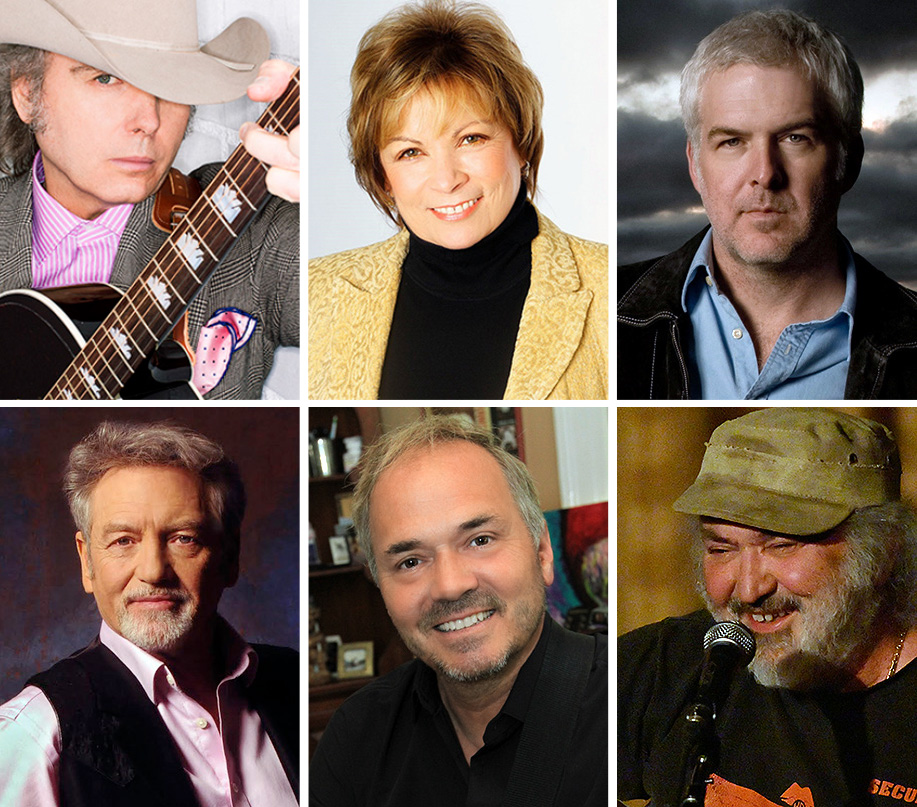
(clockwise from top left) Dwight Yoakam, Sharon Vaughn, Rivers Rutherford, Kostas, Marcus Hummon, Larry Gatlin
Larry Gatlin, Dwight Yoakam, Marcus Hummon, Kostas, Rivers Rutherford and Sharon Vaughn will be inducted into the Nashville Songwriters Hall of Fame in October, according to an announcement made today by Sarah Cates, chair of the organization’s board of directors.
The six new inductees will join the 213 existing members of the elite organization when they are officially inducted during the 49th Anniversary Nashville Songwriters Hall of Fame Gala on Monday, October 14, at the Music City Center.
“Nashville has a rich history of iconic songs and deeply-gifted songwriters, making our community known around the world as THE song town,” says Cates. “The Nashville Songwriters Hall of Fame celebrates this history by inducting a new class of legends. It’s our great honor today to welcome our class of 2019: Marcus Hummon, Kostas and Rivers Rutherford in the songwriter category; Sharon Vaughn in the veteran songwriter category, Dwight Yoakam as our songwriter/artist and Larry Gatlin as our veteran songwriter/artist.”
Marcus Hummon’s songwriter credits include “Cowboy Take Me Away” (The Dixie Chicks), “Born To Fly” (Sara Evans) and “Bless The Broken Road” (Rascal Flatts). Kostas’ resume is known for “Timber, I’m Falling In Love” (Patty Loveless), “Blame It On Your Heart” (Patty Loveless) and “Ain’t That Lonely Yet” (Dwight Yoakam). Rivers Rutherford’s hits include “Real Good Man” (Tim McGraw), “When I Get Where I’m Going” (Brad Paisley w/ Dolly Parton) and “Ain’t Nothing ’Bout You” (Brooks & Dunn). Sharon Vaughn is the writer of “My Heroes Have Always Been Cowboys” (Willie Nelson), “Y’all Come Back Saloon” (The Oak Ridge Boys) and “Lonely Too Long” (Patty Loveless). Dwight Yoakam popularized many of his own compositions, including “Guitars, Cadillacs,” “Fast As You” and “You’re The One,” Larry Gatlin recorded many of his self-penned hits with his brothers, Steve and Rudy (The Gatlin Brothers), including “All The Gold In California,” “Statues Without Hearts” and “Broken Lady”
The Nashville Songwriters Hall of Fame Gala is one of the music industry’s premier events of the year. The evening features tributes and performances of the inductees’ songs by special guest artists. In recent years artists such as Garth Brooks, Luke Bryan, Jimmy Buffett, Ronnie Dunn, Emmylou Harris, Alan Jackson, Little Big Town, Tim McGraw, Thomas Rhett, Blake Shelton, Marty Stuart, Taylor Swift, Josh Turner and Trisha Yearwood have performed at or participated in the event.
Tickets for the Hall of Fame Gala are $250 each and benefit the nonprofit Nashville Songwriters Foundation. Select seating is available to the public and may be purchased as available by contacting Executive Director Mark Ford at hoftix@nashvillesongwritersfoundation.com or 615-460-6556.
Inductee Biographical Information
Washington, D.C.-born Marcus Hummon has enjoyed a successful career as a songwriter, recording artist, producer, studio musician, playwright and author. A diplomat’s son, Marcus spent his youth in Africa and Italy. After several years playing in various bands, he found his way to Nashville. As a songwriter, Marcus has co-written hits such as “Cowboy Take Me Away” and “Ready To Run” by The Dixie Chicks, “Born To Fly” by Sara Evans, “One Of These Days” by Tim McGraw, “Only Love” by Wynonna, “The Cheap Seats” by Alabama and “Love Is The Right Place” by Bryan White. “Bless The Broken Road” by Rascal Flatts earned Marcus a 2005 Grammy for Best Country Song, as well as NSAI Song of the Year. A 2007 version by Selah w/ Melodie Crittenden, was a Top 5 Christian song and earned NSAI’s 2007 Song of the Year. Marcus has written an opera (Surrender Road, staged by The Nashville Opera Company in 2005) and six musicals, three of which were featured as part of the New York New Musical Festival in 2005, 2006 and 2011 respectively. Marcus has scored two films: Lost Boy Home and The Last Songwriter, a documentary that he co-produced.
Kostas Lazarides was born in Thessaloniki, Greece. When he was seven years old, his family immigrated to Billings, Montana. Fascinated by music, the only child was drawn early to the songs of Buddy Holly and the Everly Brothers. As a youth, Kostas began slipping into local honky-tonks to play with live bands. By the early ’70s, he was performing his original songs on the Northwest club circuit and had built a solid following. After nearly two decades of modest success one of his songs crossed the desk of producer Tony Brown, who was searching for material for Patty Loveless. In 1989, Loveless recorded Kostas’ “Timber, I’m Falling In Love,” making it his first cut, first single and first chart-topping song. Loveless would later take more Kostas songs to the Top 10: “The Lonely Side Of Love,” “On Down The Line” and “Blame It On Your Heart,” which was named the 1994 BMI Country Song of the Year. Other Kostas hits include “Ain’t That Lonely Yet” and “Turn It On, Turn It Up, Turn Me Loose” by Dwight Yoakam, “Going Out Of My Mind” and “Love On The Loose Heart On The Run” by McBride & The Ride, “Lord Have Mercy On The Working Man” by Travis Tritt and “I Can Love You Better” by the Dixie Chicks. He was named 1989 NSAI Songwriter of the Year.
Born and raised in Memphis, Tennessee, Rivers Rutherford began his musical education at the age of seven, when he took up the piano and guitar. At age 15, he was hired to play piano on the Memphis Queen riverboat. From there he played clubs on Beale Street before attending the University of Mississippi on a piano scholarship. A songwriting workshop with producer/writer Chips Moman led to a publishing contract and later to a first cut with The Highwaymen. In 1993, Rivers moved to Nashville. A staff songwriting deal followed three years later and by 1998 a string of hits began: “Shut Up And Drive” by Chely Wright, “If You Ever Stop Loving Me” by Montgomery Gentry, “Ladies Love Country Boys” by Trace Adkins, “Living In Fast Forward” by Kenny Chesney, “Real Good Man” by Tim McGraw, “Stealing Cinderella” by Chuck Wicks, “These Are My People” by Rodney Atkins, “Unconditional” by Clay Davidson and “When I Get Where I’m Going” by Brad Paisley w/ Dolly Parton. His co-written “Ain’t Nothing ’Bout You” by Brooks & Dunn was named the 2002 ASCAP Country Song of the Year. Rivers was named 2006 ASCAP Country Songwriter of the Year.
Sharon Vaughn is a Florida native whose first notable success as a songwriter came in 1976 when Waylon Jennings recorded her “My Heroes Have Always Been Cowboys” on country’s first platinum album, Wanted: The Outlaws. (Willie Nelson’s version would top the charts in 1980.) Sharon’ first hit single was with The Oak Ridge Boys’ 1977 smash “Y’all Come Back Saloon.” Since then, Sharon has written more than a dozen Top 40 Country hits, including “Broken Promise Land” by Mark Chesnutt, “Til A Tear Becomes A Rose” by Keith Whitley & Lorrie Morgan, “I’m Not That Lonely Yet” by Reba McEntire, “Lonely Too Long” by Patty Loveless, “Out Of My Bones” by Randy Travis, “Powerful Thing” by Trisha Yearwood and “Trip Around The Sun” by Jimmy Buffett & Martina McBride. In 2008, Sharon provided Pop tunes to famed American Idol alumni Clay Aiken and Jon Peter Lewis. She has lived and worked for years in Stockholm, Sweden, where her song “Release Me” by Agnes became a hit in over 40 countries. In addition to more than 100 cuts over the past several years, Sharon has also written songs for musical theatre.
Dwight Yoakam was born in the coal mining community of Pikeville, Kentucky, and raised in Columbus, Ohio. During high school, he took part in the music and drama programs; also singing and playing guitar in a variety of local bands. After graduation, he briefly attended Ohio State University before dropping out to move to Nashville in the late 1970s. When Dwight’s brand of modern honky tonk failed to mesh with the pop-oriented “Urban Cowboy” climate of the time in Music City, he moved to Los Angeles. There he met a kindred spirit in guitarist Pete Anderson. Their edgy band found success in the city’s rock and punk clubs. By the mid-1980s, Dwight had signed with Reprise Records. When his debut album, produced by Anderson, was released in 1986, it launched him to stardom. Throughout his career Dwight has written most of the songs on most of his albums. His credits as a songwriter/artist include “Guitars, Cadillacs,” “Little Ways,” “Please, Please Baby,” “I Sang Dixie,” “I Got You,” “It Only Hurts Me When I Cry,” “Try Not To Look So Pretty,” “A Thousand Miles From Nowhere,” “Fast As You” and “You’re The One,” also recorded by Flatt Lonesome and named the 2016 IBMA Song of the Year.
Larry Wayne Gatlin began his musical career at age 7 singing Gospel music in West Texas with his younger siblings. After college, Larry joined the Imperials and was performing with them in Las Vegas when he was discovered by Dottie West. Once she heard his songs, she sent him a plane ticket to Nashville and signed him to her publishing company. His early songs were recorded by her, Johnny Cash, Kris Kristofferson, Elvis Presley (“Help Me”) and Johnny Rodriguez ( “I Just Can’t Get Her Out Of My Mind”); however, as an artist himself, Larry had 28 self-penned hits reach the Top 20 between 1975 and 1990. The vast amount of Larry’s catalog is solo-written. Among his signature songs are “All The Gold In California,” “I’ve Done Enough Dyin’ Today,” “Statues Without Hearts,” “I Just Wish You Were Someone I Love,” “Night Time Magic,” “Houston (Means I’m One Day Closer To You),” “The Lady Takes The Cowboy Every Time” and “Broken Lady” (1976 Grammy for Best Country Song). Larry starred on Broadway in The Will Rogers Follies in 1993. In recent years, his Gospel songs have been recorded by many artists. Larry was inducted into the Texas Country Music Hall of Fame in 2006 and the Texas Heritage Songwriters Hall of Fame in 2007.
}"}
Back to Features
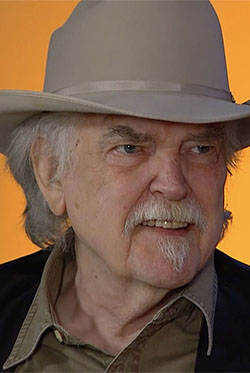
Highlights from The Songwriters public television series: Guy Clark
June 11 2019
Take a look at The Songwriters -- You’ll find this compelling conversation here.
If you’ve not yet seen The Songwriters on your local public television station, here’s your opportunity to take a peek.
The Songwriters is a half-hour interview show featuring engaging behind-the-scenes conversations with members of the Nashville Songwriters Hall of Fame (NaSHOF). Filmed in Nashville, the show is hosted by Ken Paulson, Dean of the College of Media and Entertainment at Middle Tennessee State University (MTSU). The series is produced by the Nashville Songwriters Hall of Fame (NaSHOF) in conjunction with MTSU.
Underwriting for the series is graciously provided by ASCAP, BMI and The Don Gibson American Music Foundation.
}"}
Back to Features
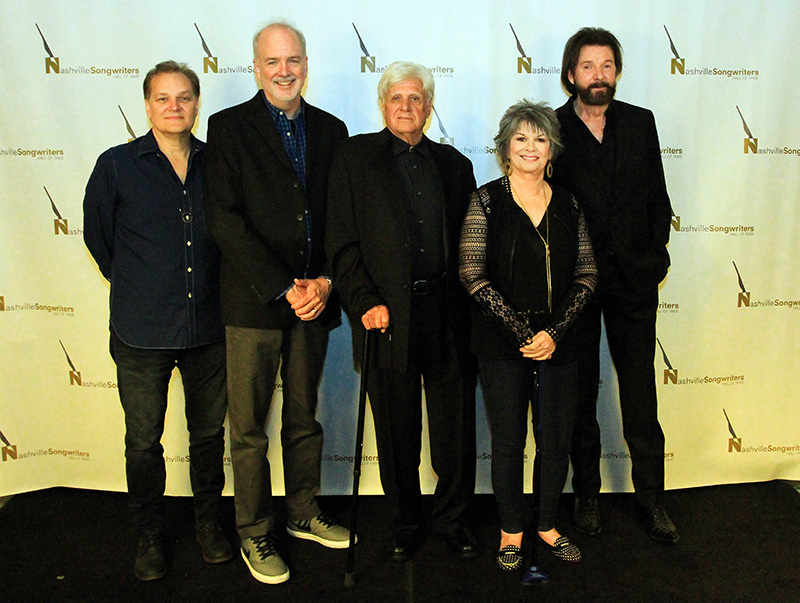
Hall of Fame Announces Class of 2018
August 08 2018
(l-r) Wayne Kirkpatrick, Byron Hill, Joe Melson, K.T. Oslin and Ronnie Dunn
Ronnie Dunn, K.T. Oslin, Byron Hill, Wayne Kirkpatrick and Joe Melson will be inducted into the Nashville Songwriters Hall of Fame in October, according to an announcement made today by Hall of Fame member Pat Alger, chair of the organization’s board of directors.
The five new inductees will join the 208 existing members of the elite organization when they are officially inducted during the 48th Anniversary Nashville Songwriters Hall of Fame Gala on Sunday, October 28, at the Music City Center.
“This time of year, as board chair of the Nashville Songwriters Hall of Fame Foundation, I am always reminded of the broad variety and high quality of the songwriting talent we are so fortunate to be able to celebrate,” says Alger. “The musical trends might change through the years, but for us it always comes back to great songs and legendary songwriters – the bedrock of the town that continues to be hailed as Music City. This year's nominees for the Nashville Songwriters Hall of Fame were, as always, inspiring and impressive, each one deserving recognition for the impact they made. Today it’s my great honor to welcome the Nashville Songwriters Hall of Fame class of 2018: Byron Hill and Wayne Kirkpatrick in the songwriter category; Joe Melson in the veteran songwriter category, Ronnie Dunn as our songwriter/artist and K.T. Oslin as our veteran songwriter/artist.”
Byron Hill’s songwriter credits include “Pickin’ Up Strangers” (Johnny Lee), “Fool Hearted Memory” (George Strait) and “Nothing On But The Radio” (Gary Allan). Wayne Kirkpatrick’s resume is known for the Grammy-winning “Change The World” (Eric Clapton) and “Little White Church” (Little Big Town) and the Broadway musical Something Rotten!. Joe Melson is the co-writer of the Roy Orbison hits “Only The Lonely (Know The Way I Feel,” “Crying” and “Blue Bayou.” Ronnie Dunn popularized many of his own compositions, including the Brooks & Dunn hits “Neon Moon,” “Boot Scootin’ Boogie” and “Believe.” K.T. Oslin recorded many of her self-penned hits, including “80s Ladies,” “Hold Me” and “Come Next Monday.”
The Nashville Songwriters Hall of Fame Gala is one of the music industry’s premier events of the year. The evening features tributes and performances of the inductees’ songs by special guest artists. In recent years artists such as Garth Brooks, Luke Bryan, Jimmy Buffett, Ronnie Dunn, Emmylou Harris, Alan Jackson, Tim McGraw, Thomas Rhett, Blake Shelton, Marty Stuart, Taylor Swift, Josh Turner and Trisha Yearwood have performed at or participated in the event.
Also at the event, NaSHOF will present Reba McEntire with the inaugural Career Maker Award in honor of her significant influence on the songwriting careers of Hall of Fame members.
Tickets for the Hall of Fame Gala are $250 each and benefit the nonprofit Nashville Songwriters Foundation. Select seating is available to the public and may be purchased as available by contacting Executive Director Mark Ford at hoftix@nashvillesongwritersfoundation.com or 615-460-6556.
Inductee Biographical Information
Winston-Salem, North Carolina, native BYRON HILL moved to Nashville in 1978 and soon signed with ATV Music Group, where he enjoyed his first cuts with “Pickin’ Up Strangers” by Johnny Lee and George Strait’s first #1 “Fool Hearted Memory” in 1982. Byron left ATV in 1984, but his songwriting resume continued to expand with “Nights” by Ed Bruce, “Born Country” by Alabama, “Alright Already” by Larry Stewart, “Lifestyles Of The Not So Rich And Famous” by Tracy Byrd, “High-Tech Redneck” by George Jones, “If I Was A Drinkin’ Man” by Neal McCoy, “Nothing On But The Radio” by Gary Allan and “Size Matters (Someday)” by Joe Nichols. Other artists who have recorded Byron’s songs include Jason Aldean, Randy Travis, Keith Whitley, Rhonda Vincent, Don Williams, Trace Adkins, Toby Keith, Porter Wagoner, Brooks & Dunn, The Oak Ridge Boys, Ricky Skaggs and Reba McEntire. To date, Byron’s songs that have generated more than 700 recordings, earned 91 RIAA certified Gold and Platinum awards, 10 ASCAP awards, 34 U.S. and Canadian Top-10 chart hits, and numerous hits in other worldwide markets.
a
At age 14, WAYNE KIRKPATRICK moved with his family to Baton Rouge, Louisiana. After a guitar lesson at a Florida Bible camp, Wayne began spending hours after school writing songs and playing younger brother Karey’s acoustic guitar. Both brothers eventually moved to Nashville, where Karey helped Wayne secure some of his first cuts. Since then, Wayne has had nearly two dozen chart-topping Contemporary Christian and Pop singles, including “Every Heartbeat,” “Good For Me” and “Takes A Little Time” by Amy Grant and “Place In This World” by Michael W. Smith (the 1992 Dove Song of the Year). In 1996, Wayne’s co-written “Change The World” by Eric Clapton was featured in the film Phenomenon and earned the 1996 Grammy for Song of the Year. In 1999 Wayne sang, played and co-wrote eight songs on Garth Brooks’ In The Life Of Chris Gaines project, including “Lost In You” and “It Don’t Matter To The Sun.” In 2002 he began a longtime collaboration with Little Big Town that yielded hits such as “Boondocks,” “Bring It On Home” and “Little White Church.” In 2010, Wayne and Karey began working on the musical Something Rotten!, which opened on Broadway in 2015 and earned 10 Tony Award nominations, including Best Musical and Best Original Score. The show launched a U.S. tour in 2017.
JOE MELSON grew up in Bonham, Texas. He began writing and singing his own songs at an early age. He spent much of his young adult years working at Standard Oil by day then playing high-school dances and local night clubs with his Rockabilly band by night. In 1957, Joe met and began writing with a then-unknown Roy Orbison. In 1960, their song “Only The Lonely (Know The Way I Feel)” launched Orbison into superstardom. The first operatic rock ballad in history, that single was inducted into the Grammy Hall of Fame in 1999. In 1961, the team created the smash “Crying.” It became a giant hit for Orbison, was revived as a pop hit by Jay & The Americans five years later and entered the country repertoire via versions by Ronnie Milsap and Don McLean, among many others. Orbison’s single was inducted into the Grammy Hall of Fame in 2002. In 1963, the duo’s “Blue Bayou” became another hit for Orbison (and, years later, Linda Ronstadt). Joe’s song catalgoue also includes “Blue Angel,” “Running Scared,” “Lana” and “I’m Hurtin’” (all hits for Orbison), as well as “Run Baby Run (Back Into My Arms)” by The Newbeats and the Glenn Barber singles “Unexpected Goodbye” and “I’m The Man On Susie’s Mind.” In 2002 Joe was inducted into the Rockabilly Hall of Fame.
RONNIE DUNN was born in Coleman, Texas, but Tulsa, Oklahoma, became his hometown. He began playing guitar and performing in Country bands when he was in his teens. After winning the Marlboro Talent Search, Arista Records expressed interest in him. The label teamed him with singer-songwriter Kix Brooks, and the two recorded as Brooks & Dunn from 1991-2011. The mega-duo sold millions of records and was named CMA Vocal Duo 14 times. The Brooks & Dunn hits “Neon Moon,” “Hard Workin’ Man,” “She Used To Be Mine,” “She’s Not The Cheatin’ Kind” and “Little Miss Honky Tonk” were all written solo by Ronnie, as was “Boot Scootin’ Boogie,” which was named ACM Song of the Year in 1992. Ronnie was BMI’s Country Songwriter of the Year in 1996 and 1998. Co-written Brooks & Dunn hits include songs such as “Brand New Man,” “My Next Broken Heart” and “Believe,” which was the ACM Song of the Year in 2005 and the CMA Song and Single of the Year in 2006. In 2011, Ronnie resumed his solo career as a singer-songwriter with “Cost Of Livin’.” Ronnie was inducted into the Oklahoma Music Hall of Fame in 2003.
K.T. OSLIN was born in Crossett, Arkansas. After her father died, she moved with her mother to Houston, where she later attended college as a drama major. In 1966, she joined the road company of Hello Dolly!. When the musical returned to Broadway, K.T. remained in the cast. During the next two decades, she appeared as a chorus girl in musicals such as Promises, Promises and West Side Story. She also sang commercial jingles around New York and began writing songs. By 1981, she was signed to Elektra Records and released two singles with modest success. She also had songs recorded by Gail Davies, The Judds and Dottie West. By 1987, K.T. had moved to Nashville and signed with RCA Nashville. She scored big with her self-penned “80s Ladies,” which was named 1988 CMA Song of the Year, making her the first female writer to win the award. That album also launched the singles “Do Ya” and “I’ll Always Come Back.” Her second album generated five singles, including “Money,” “Hey Bobby,” “This Woman,” “Didn’t Expect It To Go Down This Way” and “Hold Me,” which earned the 1988 Grammy for Best Country Song. K.T.’s third album generated the hits “Come Next Monday” and “Mary And Willie.” She was named 1988, 1989 and 1991 SESAC Songwriter of the Year. K.T. is a 2014 inductee into the Texas Heritage Songwriters Hall of Fame.
}"}
Back to Features
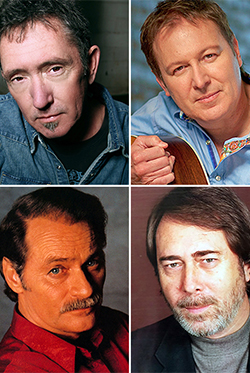
Hall of Fame Announces Class of 2017
August 09 2017
(clockwise, l-r) Walt Aldridge, Tim Nichols, Jim McBride, Vern Gosdin
Vern Gosdin, Jim McBride, Walt Aldridge and Tim Nichols will be inducted into the Nashville Songwriters Hall of Fame in October, according to an announcement made Aug. 9 by Hall of Fame member Pat Alger, chair of the organization’s board of directors.
The four new inductees will join the 203 existing members of the elite organization when they are officially inducted during the 47th Anniversary Nashville Songwriters Hall of Fame Gala on Monday, October 23, at the Music City Center.
“The quality of the songs that emanate from the legendary Nashville Songwriting community is most often the standard by which most songwriters measure their success,” says Alger. “Iconic songs from its eminent songwriters help make this town the musical sanctuary it has become and in turn, the Nashville Songwriters Hall of Fame celebrates the illustrious careers of those songwriters each year by inducting four new members, the highest honor that any Nashville songwriter can hope for. This year we are extremely proud to welcome the class of 2017: Walt Aldridge and Tim Nichols in the songwriter category; Jim McBride in the veteran songwriter category and the late Vern Gosdin as our songwriter/artist.”
Walt Aldridge’s songwriter credits include “(There’s) No Gettin’ Over Me” (Ronnie Milsap), “Holding Her And Loving You” (Earl Thomas Conley) and “Modern Day Bonnie And Clyde” (Travis Tritt). Tim Nichols’ resume is known for “I’m Over You” (Keith Whitley), “Heads Carolina, Tails California” (Jo Dee Messina) and “Live Like You Were Dying” (Tim McGraw). Jim McBride is the tunesmith behind “Rose In Paradise” (Waylon Jennings), “Chasing That Neon Rainbow” (Alan Jackson) and “Chattahoochee” (Alan Jackson). Vern Gosdin popularized many of his own compositions, including “Set ’Em Up Joe,” “I’m Still Crazy” and “Chiseled In Stone.”
The Nashville Songwriters Hall of Fame Gala is one of the music industry’s premier events of the year. The evening features tributes and performances of the inductees’ songs by special guest artists. In recent years artists such as Garth Brooks, Jimmy Buffett, Ronnie Dunn, Emmylou Harris, Alan Jackson, Tim McGraw, Thomas Rhett, Blake Shelton, Marty Stuart, Taylor Swift, Josh Turner and Trisha Yearwood have performed at or participated in the event. Fellow songwriter organization the Nashville Songwriters Association International also participates in the evening by presenting its annual awards for the year’s Best Song, Songwriter and Songwriter/Artist, as well as the Top 10 “Songs I Wish I Had Written” as determined by their professional songwriters division.
Tickets for the Hall of Fame Gala are $250 each and benefit the nonprofit Nashville Songwriters Foundation. Select seating is available to the public and may be purchased as available by contacting Executive Director Mark Ford at hoftix@nashvillesongwritersfoundation.com or 615-460-6556.
Inductee Biographical Information
VERN GOSDIN was born in Woodland, Alabama. He grew up singing in church with his brother, Rex. In 1961, the brothers moved to Los Angeles, where they performed in a bluegrass group before forming their own duo, The Gosdin Brothers. In the early ’70s, Vern moved to Atlanta, where he ran a retail store. Then in 1977, old friend Emmylou Harris helped him sign a record deal with Elektra Records in Nashville. In 1982 he scored a Top 10 hit with his self-penned “Today My World Slipped Away” (also a Top 5 hit for George Strait 15 years later), followed by “If You’re Gonna Do Me Wrong (Do It Right)” in 1983. Vern moved to Columbia Records in the late ’80s, this time charting a series of Top 10 singles with songs he co-wrote, including “Do You Believe Me Now,” “Who You Gonna Blame It On This Time” and “That Just About Does It.” Two more of his original songs — “Set ’Em Up Joe” and “I’m Still Crazy” reached #1. His co-written “Chiseled In Stone” was named the 1989 CMA Song of the Year. His last Top 10 singles were released in 1990 — “Right In The Wrong Direction” and “Is It Raining At Your House.” Vern died in Nashville on April 28, 2009 at age 74.
JIM MCBRIDE was born in Huntsville, Alabama. He grew up in a house filled with music from his mother’s radio. At 21, he got his first guitar and began taking lessons from his uncle. Jim started bringing his songs to Nashville in the early 1970s, and by 1972 had several cuts by The Hagers. Though the songs didn’t become radio singles, they did get played on the weekly TV show Hee Haw. In 1980, Conway Twitty hit with “A Bridge That Just Won’t Burn,” prompting Jim to make the move from Huntsville to Nashville. More hits followed throughout the decade: “Bet Your Heart On Me” by Johnny Lee, “Your Memory Ain’t What It Used To Be” by Mickey Gilley and “Rose In Paradise” by Waylon Jennings. In the early 1990s, Jim met an aspiring young singer named Alan Jackson and their collaboration yielded the #1 hits “Chasing That Neon Rainbow,” “(Who Says) You Can’t Have It All,” “Someday” and the smash “Chattahoochee,” which was Song of the Year for the Country Music Association, ASCAP and American Songwriter Magazine, as well as Billboard Magazine’s most performed song of the year. Additionally, Jim co-wrote the Top 10 singles “What I Meant To Say” by Wade Hayes and “Angels In Waiting” by Tammy Cochran.
WALT ALDRIDGE was born in Florence, Alabama. He spent 17 years as staff engineer at Fame Studios in Muscle Shoals and 15 years as an independent engineer in Nashville, working on some 200 records in that length of time. In the late 1980s, he sang lead vocals in the band The Shooters, a country band which charted seven singles for Epic Records. Among his best-known songs are “I Am A Simple Man” by Ricky Van Shelton, “I Loved Her First” by Heartland, “Modern Day Bonnie And Clyde” by Travis Tritt, “She Sure Got Away With My Heart” by John Anderson, “She’s Got A Single Thing In Mind” by Conway Twitty, “Some Things Never Change” by Tim McGraw, “The Fear Of Being Alone” by Reba McEntire and “‘Till You’re Gone” by Barbara Mandrell. “(There’s) No Gettin’ Over Me” by Ronnie Milsap was the 1982 ASCAP Country Song of the Year. “Holding Her And Loving You” by Earl Thomas Conley was the 1983 NSAI Song of the Year. An alumnus of the University of North Alabama (UNA), he teaches in his alma mater’s Entertainment Industry Program. He has also been awarded a bronze star on the Alabama Music Hall of Fame Walk of Fame.
TIM NICHOLS was born in Portsmouth, Virginia, and raised in Springfield, Missouri. After college, Tim and his band moved to Nashville. By 1984 he was signed to Ronnie Milsap’s publishing company. Tim’s first hit was 1990’s “I’m Over You” by Keith Whitley, which reached #3 on the Country chart shortly after his death in 1989. After a stint on BNA Records in the duo Turner-Nichols, Tim’s songwriting took off with hits such as “Brotherly Love” by Keith Whitley & Earl Thomas Conley, “Heads Carolina, Tails California” by Jo Dee Messina, “(This Ain’t) No Thinkin’ Thing” by Trace Adkins, “I’ll Think Of A Reason Later” by Lee Ann Womack and “That’d Be Alright” by Alan Jackson. In 2004, his “Live Like You Were Dying” by Tim McGraw swept the awards with the 2004 Grammy for Best Country Song, the 2004 CMA Song and Single of the Year, the 2005 ACM Song and Single of the Year, the 2005 ASCAP Country Song of the Year and the 2005 BMI Country Song of the Year. Recent hits from Tim include “A Baby Changes Everything” by Faith Hill, “The Man I Want To Be” by Chris Young and “I Got The Boy” by Jana Kramer.
}"}
Back to Features
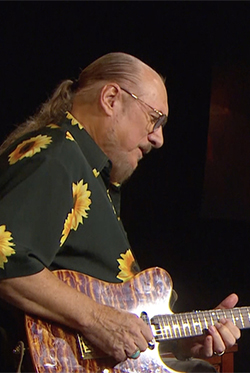
NaSHOF TV Show Premieres Jan. 28 on WNPT2
January 16 2017
“The Songwriters” – a weekly television show spotlighting Hall of Fame songwriters -- will premiere Saturday, Jan. 28, on Nashville Public Television WNPT2. “The Songwriters” will air three times weekly – Saturdays at 8:30 p.m. (statewide), and Sundays at 9:30 a.m. (Nashville only) and 4:30 p.m. (statewide), all Central Time. The show will be available on Comcast Digital Cable channel 241, Charter Digital Cable channel 176, and over-the-air on channel 8.2.
A weekly television show spotlighting Hall of Fame songwriters will debut in January on Nashville Public Television. “The Songwriters” will premiere Jan. 28 on WNPT2. Produced by the Nashville Songwriters Hall of Fame (NaSHOF) in conjunction with Middle Tennessee State University (MTSU), the show features engaging conversations with Hall of Fame members about their creative processes and the inspirations for some of their greatest songs.
"Just as these conversations have inspired professional songwriters like me, they will have a tremendous impact on anyone interested in how great songs were written and the people who wrote them,” said Pat Alger, Chair of the Nashville Songwriters Hall of Fame Foundation. “The show is as entertaining as it is informative - the intimate performances and the witty dialogue will stick with you for a long time."
The inaugural season of 18 episodes will reveal behind-the-scenes stories and anecdotes, as well as showcase rare performances of some of the most-revered songs in the history of the Nashville music scene. Some of the Nashville Songwriter Hall of Fame members who will be showcased throughout the season include Bill Anderson, Steve Cropper, Gary Burr, Sonny Curtis, Tom Douglas and Ray Stevens, plus many more. Ken Paulson, NaSHOF Board member and Dean of MTSU’s College of Media and Entertainment, will host the show.
"We're very pleased to share these rich conversations with some of the world's greatest songwriters," said Paulson. "Their insights about their art and inspiration make for truly compelling television."
“The Songwriters” will air three times weekly – Saturdays at 8:30 p.m. (statewide), and Sundays at 9:30 a.m. (Nashville only) and 4:30 p.m. (statewide), all Central Time. The show will be available on Comcast Digital Cable channel 241, Charter Digital Cable channel 176, and over-the-air on channel 8.2.
The show is directed by MTSU professor Robert Gordon, Jr. and filmed by students from the school’s College of Media and Entertainment.
About the Nashville Songwriters Hall of Fame
Induction into the Nashville Songwriters Hall of Fame (NaSHOF) is one of the nation’s most highly prized songwriting honors. Since 1970, nearly 200 of Music City’s top tunesmiths from all genres of music have been enshrined by the non-profit organization, which honors Nashville’s rich legacy of songwriting excellence through preservation, celebration and education. In 2013, NaSHOF realized a long-held dream with the opening of its Hall of Fame Gallery, located in downtown Nashville on the first floor of the Music City Center (201 5th Avenue South).
About MTSU
Founded in 1911 as one of three state normal schools for teacher training, Middle Tennessee State University is one of the oldest and largest undergraduate universities in the state of Tennessee. With a fall enrollment averaging more than 22,000 students for the past five years, MTSU remains committed to providing individualized service in an exciting and nurturing atmosphere where student success is the top priority. MTSU features eight undergraduate colleges and the College of Graduate Studies, and more than 150 programs and departments, including the internationally recognized Department of Recording Industry in the College of Media and Entertainment. Recording industry undergrad majors can focus on audio production, commercial songwriting or music business. A Master of Fine Arts degree in recording arts and technologies prepares MTSU graduate students for advanced work in audio production, recording and integrated electronic media. For more information about MTSU, call 615-898-2300, visit mtsu.edu or mtsunews.com. Follow MTSU on Twitter @MTSUNews and like us on Facebook.
}"}
Back to Features
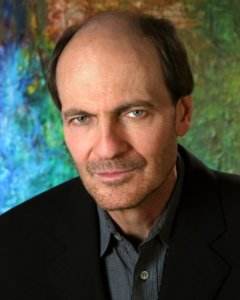
Ten Questions With Bobby Braddock
June 25 2008
Feature interview with Nashville Songwriter Hall of Fame member Bobby Braddock. Bobby discusses how he got his start, producing, performing, and the importance of giving back.
Legendary songwriter and producer, Bobby Braddock was inducted into the Nashville Songwriter's Hall of Fame in 1981 at just 40-years-old. His first song "Walkin' Papers" was produced in 1961, and he's been writing hits ever since.
Bobby is known for writing some of country music's greatest songs, such as: "D-I-V-O-R-C-E" for Tammy Wynette, "He Stopped Loving Her Today" for George Jones (which won the CMA Song of the Year Award two years in a row, only the second song in CMA history to boast that accomplishment), "Time Marches On" for Tracy Lawrence, and Toby Keith's "I Wanna Talk About Me." In addition, he's written hits for such renowned artists as the Oak Ridge Boys, Tanya Tucker, Willie Nelson and Jerry Lee Lewis, just to name a few. In recent years, he discovered Blake Shelton and produced three hugely successful albums for him.
Today he is focusing on a different kind of writing. After the success of his first autobiography, "Down in Orburndale: A Songwriter's Youth in Old Florida," he's currently working on his second memoir about Nashville's Music Row and how it has changed over the years.
Q: What does it mean to be in the Nashville Songwriters Hall of Fame?
BB: To be recognized by one's peers is the ultimate honor and I appreciate it now more than ever. I was inducted in 1981, when I was just 40 years old, so it was a bit of a shock—I wasn't expecting it. But as time has gone by it means more and more.
Q: How did you get started writing songs?
BB: I started fooling with songs in my teens. I would send them to Nashville, and they would come back unopened. I felt pretty certain that I could make a living as a piano player, so I went ahead and moved to Nashville. I wasn't sure I was good enough to be a songwriter. My first job was playing piano for Marty Robbins, and after he recorded a couple of songs that I wrote, I thought, "Hey, I am a songwriter." So I quit the road with Marty and went to Sony, ATV Publishing, which back then was called Tree Publishing. I have pretty much been there ever since.
Q: Where does the inspiration for your songs come from?
BB: Inspiration for songs comes from life and having lived it: my life as well as the lives of people around me. Writing from life is the easiest thing because you just tell the truth. You make it rhyme and put a melody to it, get a little inventive, take some license and change things around a little bit. Certainly, everything that I write is not autobiographical or discreetly out of someone's life, but that's where the inspiration comes from.
Q: What is the one lesson that you learned from songwriting that you will never forget?
BB: That the part of your brain that creates something is not the same part of your brain that perceives something. I've learned that when I first write something and think it's the most wonderful thing in the world- I have to step back from it and listen to it a couple of days later, as if it were someone else's work. That way there is some objectivity. I don't trust my judgment initially.
Another lesson is "Don't be too big for your britches." That goes for anything in the music business. I know some people who have a little bit of success and they become very arrogant. I have tried to remember that whatever I do and whatever I have can be taken away from me, and I need to be thankful for all the success. I also try to keep this in mind when people who haven't had success yet come to ask for advice. I do whatever I can to give a helping hand and point someone in the right direction.
Q: Is there a particular song you wish you had written and why?
BB: I remember when I heard Rodney Crowell's "Please Remember Me," which I think is the best splitting-up song I have ever heard, thinking, "Wow! I wish I had written that song." I think that's the ultimate compliment you can give to a songwriter. "Making Memories of Us" is another. When I hear a really great song, I wish it was one that I had written. I've also written a lot of songs that I wish no one had heard. [laughs] Harlan Howard once said that we all write our crap, but the better of us hopefully have better sense than to let other people hear it.
Q: How can you tell a good song from a great one?
BB: It's all subjective. What I think is great, some people may not get excited about at all. For me, it's something that stands out as unique, even if it's saying the same old thing in a way that no one has ever said it before. Something said in a way that people can identify with, people can understand, and something that has staying power. Something that people would recognize 20 or 30 years from now.
Q: How did you get your first song recorded?
BB: My first song was recorded by Marty Robbins. He asked me to write a western cowboy song and I wrote "Matilda." It was a song about a pioneer woman. After that, he recorded a couple more of my songs. So just being in his band gave me an opportunity to start songwriting.
Q: Where were you when you heard your song on the radio?
BB: I was driving to the Nashville Public Library and had the radio on and heard Marty Robins singing "While You're Dancing." I remember it was just a wonderful feeling to hear my song being played on the radio.
Q: And what advice would you give someone that wants to become a professional songwriter?
BB: Be absolutely certain that it's what you want to be, because to be truly successful at it, you have to be prepared for disappointments and be willing to give yourself a good timeline. It's hard to be successful at songwriting — even harder today because CD sales are down so much and that's a trend that's only going to get worse. I think there will come a time when the primary income for songwriters is going to be airplay, which means you have to have hit songs. People who have a knack for getting songs on albums but not getting very many singles — I'm afraid their future doesn't look very lucrative. And I would suggest it's easier if you live where the action is around the recording center. If that's country music, of course, that would be Nashville. As the saying goes — you have to be present to win.
Q: Looking back on all it took for you to become a successful songwriter - would you do it all over again?
BB: I'm not sure if I would have focused on songwriting or producing. I might have been an author or a journalist. I think I would be equally happy in any of those fields. There are a lot of things that I could have done that I would have loved. But I have a happy life as a songwriter. It's been wonderful!
For more information on Bobby Braddock visit his Web site: Down in Oburndale.com.
}"}
Back to Features
Ten Questions With Mike Reid
July 06 2008
Grammy winning songwriter, Mike Reid, discusses the ups and downs of writing, what makes a good song, and the importance of hard work.
Grammy winner and former four-time, All-Pro CincinnatiBengal Mike Reid, was inducted into the Songwriter's Hall of Fame in 2005. Since moving to Nashville in 1980, he's written hits for such mega-stars as Willie Nelson, Ronnie Milsap, Tim McGraw, Wynona and Bonnie Raitt, whose "I Can't Make You Love Me" sold more than six million copies. In 1991, he wrote and sang his way to his own #1 hit with "Walk on Faith."
In addition to songwriting, Mr. Reid writes musical theater and has had productions of his plays, chambers and even operas performed throughout the world. Currently, he's writing a four-character piece that was recently performed in San Francisco.
Q: What does it mean to you to be in the Songwriters Hall of Fame?
Mike Reid: I'LL TELL YOU WHAT. IT MEANS— A LOT MORE THAN I THOUGHT IT WOULD! The night they announced my name and Don Schlitz did the introduction speech, beside the birth of my kids, it really genuinely was one of the best nights of my life. It surprised me that it hit me like it did. I got very emotional.
Receiving an honor like this is something that in the songwriter's heart is deeply appreciated, but not necessarily something aspired to. The life of a songwriter is measured across the arc of decades, not the handful of years. There are times when everything you write is recorded and times when absolutely nothing you write gets recorded. You have to bring as much truthfulness to what you do as you know how. I've always told young songwriters that discipline and commitment are not quite enough. That one must be sufficiently compelled to do this. And if you are sufficiently compelled against all common sense, you will simply do this all the time. And over the arc of years and years, if an organization says "Hey, we appreciate what you did" and they give you a night— and in this case a beautiful sculpture—it's really neat.
Q: So how did you get started writing songs?
MR: I started writing when I was a kid. I used to make up ragtime, boogie-woogie pieces in the 5th and 6th grade talent shows and rock out on the piano. But really it goes back to when I was still playing professional football in my early 20s. I don't know why I started writing. I think generally writers write because there's a disturbance inside and you're trying to get at something— an itch that needs to be scratched. But it took me a very long time to realize that what I wanted to be was a songwriter. And more than that, I desired to be a songwriter who was understood.
Q: Where does the inspiration from your songs come from?
MR: From my own existence, my literal life itself. Nothing comes out of a vacuum. We are all in this mess together. We are all saying things, falling in and out of love, loving one another and hurting one another, and trying not to be lonely as we go through this world. I think setting experiences people have to this strange and unique language called music. I don't think that my inspiration is unique nor is anyone's. It's a degree to which you are willing to look at yourself or observe the emotional contours of your life. I think that's where it comes from for pretty much everyone.
Q: What is one lesson that you have learned from songwriting that you will never forget?
MR: By nature I'm a complainer and a whiner. I hear a Don Schlitz song or a Troy Seals song and think, "I wish I could write like that." There's an Adam Mitchell song called "Out Among The Stars." Some people know it and some don't. I, in a very curmudgeonly, cranky stance, believe that the whole world should know that song. I think it is an absolutely breathtakingly, brilliant piece of work. When I hear that song or the Hugh Prestwood song "A Song Remembers When," and I think 'I would give a limb to be able to write like that.' But the thing is, it doesn't stop me. I tell my son, who is a songwriter, before any judgments of good or bad, interesting or not, are passed on your work, you must do one thing. One thing must come first, you must show up! You must show up and you must do it relentlessly. Again, it ties back to the idea that if you are sufficiently compelled to do this work, you will do it against all common sense. That is what I've learned. It's not about divine inspiration. Very often your own ego gets in the way of the idea that God or the world or nature has given you. But you have to get your ego out of the way. There is a part of you that's unlike anyone else in the world. It is what makes you unique, and it will wait a lifetime if necessary—but it is waiting for you to show up.
Q: You may have already answered this question, but is there one song that you wished you had written and why?
MR: There are just too many, I wished I had written. There are several Patti Griffin songs. As I mentioned earlier, the Adam Mitchell song,"Out Among the Stars" is brilliant. I wish I had written "The Gambler." Tom Schuyler's song "Years after You." Hugh Prestwood's, "Ghost in this House." Peter Gabriel's song, "Don't Give Up." I wish I had written something simple and direct and as meaningful as "Amazing Grace." I think it's extraordinary the way it's traversed the centuries. But I don't feel a trace of jealously for these people or their work. There is no place for jealousy and cynicism in the life of a songwriter. As Oscar Wilde said, "the cynic understands the cost of everything and the value of nothing."
Q: How do you tell a good song from a great one?
MR: Oh, what a wonderful question! I don't know, contours of the melody? Does the melody haul? I find that lacking a little in songwriting today given the higher syllable count in a particular melodic line—that keeps the melody line from doing any kind of heavy work. The relationship of the melody to the chord structure, harmonic structures of the song, however simple, can make the song. To me, "Let It Be" is a great example. [Sings, "I bless the day I found you…."]) It's a beautiful perfectly rendered song, the right words bridged with the right melody. I find the use of the language extraordinarily interesting. Especially using rhyme for a point, not rhyming for the sake of rhyme itself, Writers whose rhyme scheme drives a point- deeply into your heart or deeply into your experience—I admire that. It's hard to do. It's really a gift. We don't have to plunge into the depths of our tortured psyche to make a great song. I think any one of a dozen Motown songs are among the greatest songs ever written. "My Girl," "Tracks of My Tears." "Tracks of My Tears," are you kidding me? "Save the Last Dance for Me" may be, in my lifetime, as close to a perfect song as there is. "Yesterday," or any early Beatles songs, "I Wanna Hold Your Hand" or "I Saw Her Standing There" are beautiful, simple, direct stuff. I also love "Vincent." I wish I'd written "Vincent." That song means as much to me, as any song every has, maybe more, because of what that song says. But a song doesn't have to be "Vincent" to be transcendently brilliant.
Q: How did you get your first song recorded?
MR: It was in the 70s, and I was playing the road in little listening joints. I ended up after hours at a place called The Great Southeast Music Hall in Atlanta. I had drinks one night with the owner, Jack Tarver, and James Talley, who was an absolutely first rate, wonderful songwriter named James Talley. I don't know what we drank, but we had way to much of it. [laughs]They had a little recording studio there and we started playing songs. Next thing you know, they started recording me. I had written a song called "Eastern Avenue," and it ended up on that tape. Somehow, through James Talley, in a circuitous root, it ended up in the hands of Jerry Jeff Walker, who was this legendary Texas crazy man, and he recorded it. That was in 1978. That was the first time I picked up a record album and saw my name on it.
Q: Where were you when you heard your first song on the radio?
MR: I was where I generally am when I hear music—in the car. I was driving down 16th Avenue on Music Row. It was 1983, and the song was called "Inside" by Ronnie Millsap. In those days, I tended to listen to the radio a little more. I was in my brown dodge pick-up truck.
Q: You touched on this earlier, but what advice would you give someone who wanted to become a professional songwriter?
MR: I'll tell you a little story. Kyle Lenning, a wonderful record producer in town, and I went down to the Southern Festival of Books several years ago. There we met a man named Reynolds Price, a great writer who happens to be from the South. I say it that way because I have heard he takes issues being called a Southern writer. He is a large man in a wheelchair due to a spinal cancer, which happily didn't kill him, but put him in this wheelchair. He was the most eloquent speaker that I have ever heard. He just opened his mouth and the whole world stopped. You wanted him to just keep talking. They had a little panel, and it came to the question and answer period. A woman came out of the audience and went to the microphone and said "Mr. Price, my granddaughter has just quit in the fourth year of her medical school to be a writer. Do you have any advice for her?" He moved around in his chair and said, "Yes, ma'am, I do. I would tell your granddaughter to quit if she can." There was a great silence. The implication was wonderful. If you can quit, if you can have a good happy life without doing this, then get on with that. But if you can't quit, then shut up and get to work. You might as well accept your plight and go to work. That's what I would tell a writer. I would tell a writer one needs to know oneself. Can you have a wonderful life without this? Well, get on with it. If you can't, then go to work.
Q: Looking back on all it took for you to become a successful songwriter, would you do it all over again?
MR: I will take one issue with your question. I don't feel like a successful songwriter. I can name you half a dozen guys I consider successful songwriters. It could be because it comes so difficult for me. It's so hard for me to address an idea that I believe in. I write all the time. If I begin to think about the amount of what the world has heard from me in relation to what I have written it seems kind of small. Maybe that keeps one in check. I won't tell you my age, but I'm in the full throws of adulthood. For all my complaining and grumpiness, I write everyday, I work at it every day. At the end of the day, if I've worked extremely hard at it, I feel good. It is a nice feeling. I've earned that evening glass of wine. Absolutely, I would do it again. I wouldn't give it a second thought.
I try not to dwell on the fact that I have had an inordinate amount of luck with people like Ronnie Millsap and Bonnie Raitt. The cards have fallen my way in a very big way, a few times. I wouldn't know how to tell a new writer to look for that. Songwriting has caused me a great deal of stress and provided a great deal of exhilaration, all at the same time. Right now, I am working on a play. It's about the relationship between an older man that just hit seventy and a young man in his late twenties. They are forced, with their wives, to spend New Years Eve in this abandoned house. As the evening progresses there's trouble between the young couple, and they have an intense fight. The two men go out and sit in the snow with a drink of whiskey and a cigar. The young man says to the old man "Henry, why did I think getting married would make me happy?" I wrote this next line and I don't know if it will stay in the play but I love it. Henry, the old man says, "Kid, if you want to be happy, go buy an ice cream cone. But if you want to live, that's going to involve other people, and there's your trouble." A songwriter's life is the most stressful life of ease you could ever imagine. I'm at a stage in my life when I'm writing better now than I ever have. It's just not being heard. But you know, that's a wonderful clarifying question. I absolutely would do it again. Considering all the stresses and exhilaration, and the mess of it all, it's been a wonderful life.
}"}
Back to Features
Ten Questions With Jim Weatherly
September 28 2008
Nashville Songwriters Hall of Fame Member, Jim Weatherly, shares entertaining stories about songwriting, inspiration behind his hits, and being in the right place at the right time.
Jim Weatherly is best known for his million-selling hit songs by Gladys Knight and the Pips including "Midnight Train to Georgia," "Neither One of Us, and "The Best Thing That Ever Happpened to Me," all three of which have become pop and R&B standards. In addition to recording seven albums himself, he's also had his songs recorded by Vince Gill, Steve Wariner, Dan Seals, Marie Osmond, Bill Anderson, Charley Pride, Eddy Arnold, Dean Martin, Johnny Mathis, Peter Cetera, The Indigo Girls, Jeff Carson, Lee Greenwood and Kenny Rogers, just to name a few.
Mr Weatherly has been honored by the Nashville Songwriters Association International as Songwriter of the Year and has won more than 30 ASCAP songwriter awards. He was inducted into the Nashville Songwriters Hall of Fame in 2006. Today Jim continues to write and record songs and currently sells his albums on Web site, and at CD Baby and Amazon.com.
Q: What does it mean to you to be a member of the Songwriter's Hall of Fame?
Jim Weatherly: It definitely raises your self-esteem as a writer, it truly does. When you're selected by your contemporaries to be among the elite of your peers, it's a very, very special thing. It means they accept you and what you do, and that what you have done is relevant in the history of music. There's just no greater honor, no greater thrill.
Q: How did you get your first song recorded?
JW: My very first cut happened when I was in college. I was in a band called "Jimmy Weatherly and the Vegas." We recorded some songs that were released on 20th Century Fox Records. My first cut recorded by another artist happened when I was walking the streets of L.A., pitching songs, trying to find somebody to cut something. There were a couple of producers looking for some funky R&B music. It was the late 60's. I pitched them a song called "Mama Your Daddy's Come Home." They cut it using a singer named "Magnificent Maluchie." I think my next cut was by Peggy Lee. She was doing an album, and I had a song called "He Used Me." She fell in love with it, and she cut it in on one of her albums. After that, I actually wrote for Jim Nabors' publishing company for about two years. That was when he had a variety TV show. As I remember, he cut three of my songs: "If I Never Laugh Again," "It's My Life," and "Louisiana Lady."
Q: How did all the hits with Gladys Knight come together?
JW: I went to L.A. after college in 1966. I moved there with a rock 'n roll band called Gordian Knight, who I played with for about four years. We did one album for Verve.
After the band split up, I met Jim Nabors through Lee Majors, whom I had become friends with. Lee introduced me to Jim, and Jim asked if I wanted to start writing songs. I said "Sure." What else was I going to do besides walk the streets and park cars? When Jim's variety show ended, we parted ways. At that point, I was just walking the streets trying to find someone who liked what I did. That was when I met Gary Usher. He was one of the original surfers and he wrote a lot of songs with Brian Wilson. He wrote for Jan & Dean and The Handels. I asked Gary to listen to some of my songs, and he was very gracious about it. He introduced me to Larry Gordon, who became my publisher and manager. Larry was a really fine publisher, a one-man operation. Basically, it was his company, and he didn't have to answer to anybody. He went out and got songs cut and that's how all those songs came about.
That's also how Gladys Knight came around. He knew Joe Porter, who was producing Gladys for Motown. Joe really liked a song I wrote called "Neither One of Us." I had cut it on my first album, and Joe heard it and wanted Gladys to record it. I never really imagined writing R&B songs. I really thought I was writing country songs. But they heard something in my songs—looking back it was probably the way they had a lot of space between lyrics. I didn't try to fill up everything with words or move everything close together. The songs would breathe, so you were almost waiting for what the next line was, as opposed to the line hitting before you were ready to hear it. So Gladys cut that song, and it actually became a #1 record. You'll read everywhere that it was a #2 pop record, but now that I have the opportunity to set the record straight, I'm going to! The song was "Neither one of Us," and it was #2 pop record on Billboard and #1 in Cashbox and Record World, which were both industry standards at that time. It was also a #1 R&B record as well.
The story behind "Midnight Plane to Houston," which was the original title of "Midnight Train to Georgia" is pretty well documented, but pretty interesting as well. I was playing on a flag football team with some guys in LA. Lee Majors was on the team. Lee had just started dating Farrah Fawcett, and when I called up to his house one day, Farrah answered the phone. During the course of the conversation, Farrah said she was packing her clothes—she was taking the midnight plane to Houston to visit her folks. When she said it, my mind really went away from the conversation. When I got off the phone, I sat down and wrote "Midnight Plane to Houston" in just a little more than 30 minutes. It just literally fell out. My mind was using Lee and Farrah as the people in the song, so it was like I could see the visuals. I didn't know where it was going, because back then I didn't know how to craft a song, I was just writing because it was a natural part of me. When I got to the line in the chorus "leaving on a midnight plane to Houston, going back to a simpler place in time, I'll be with her on the midnight plane to Houston, I'd rather live in her world then live without her in mine" it really wrapped it up in a nice package. After I wrote it, I cut it on my first album.
We also sent Gladys "Midnight Plane to Houston," but before she ever did it, I got a call from a producer in Georgia named Sunny Limbs. He wanted to cut the song with Cissy Houston but needed a more R&B title in order to get it played on black radio. So we changed the title to "Midnight Train to Georgia." It was a mid-chart R&B record at that time.
After Cissy's version came out, we sent the song to Gladys again. She told us that the Pips were from Georgia, so when they heard that version, it was a natural for them. She felt more at home with it at that time and went in and cut it. I was absolutely amazed when I heard it. I always thought it was the kind of song Glenn Campbell might cut because he was having success with "Galveston," "By The Time I Get To Phoenix," and "Wichita Line." But when I heard "Midnight Train to Georgia" the way Gladys's did it, with all the background parts, I felt blessed! That's the only way I can put it. And I never dreamed it would still have a life after 35 years. They have used it on American Idol the last four years straight. In the finale, they had an old video of Gladys' performance and had taken out the Pips. Instead they had Ben Stiller, Robert Downey Jr., and Jack Black. They were doing all the Pips movement behind her, and it was hilarious! They released it to download on itunes for a week, and it became the #1 download. So I feel very fortunate that I have had some songs with Gladys that have stayed around a long, long time.
Q: Where does the inspiration come for your songs?
GW: In the early days, I wrote just by a stream of consciousness. I would just pick up a guitar and start playing. Just playing some chords and mumbling would transform into words and a melody and a song would start to take shape. For instance, when I wrote "Neither One of Us," I was really in a blue funk. I came in one night, sat down on the bed and picked up my guitar. I sang the first verse to the song, and I didn't have a lyric or a title, I didn't have any of that. The mood that I was in totally inspired the emotion, and the emotion came out in music. The whole first verse just fell right out. When I got to the last line of the verse and said "Neither one of us wants to be the first to say goodbye," I knew I had a song. I knew that it was a really fine song. So many people I had been playing my songs for at the time would say to me "You write such sad songs. Why don't you write some up tempo songs? Why don't you write positive songs? Why don't you do anything that is different then what you are?" So when I wrote this song, when I finished "Neither One of Us," I closed my book and I thought, "Well, there is another sad song nobody will ever want to hear." I'm really glad I was wrong about that one, and I'll bet so was everybody else who turned it down.
Q: What's one lesson you've learned about songwriting that you can pass on to future songwriters?
JW: There are no rules, but there are rules. Music changes, so the rules today might not apply tomorrow. The kind of music you write today might not apply tomorrow. Sometimes the music you write today might be ahead of its time and won't be ready to be heard until tomorrow. So I just write what I believe is honest and true and good, and let it fall where it falls. I never attempt to write a hit song. I just write songs that come to me. When I attempt to write a hit song it really doesn't come out quite as true, quite as honest to me. I think for the most part people pick up on that. When I hear music with a false sincerity, I don't believe the song or the artist. The songs I fall in love with as writer and listener of music are songs where I believe what that artist is saying. Even if the story is make believe, it can have a semblance of universal truth so that people can relate.
Q: Are there any songs that you wish you had written?
JW: I feel I have written some songs that are very special, but there are some songs that others have written that I absolutely love. One of my early favorites was "Unchained Melody." That song has come back time and time again. So there was obviously something in that song that touched people. "The Twelfth of Never" is a song you don't hear much of today. Another song I really love is "I Can't Make You Love Me," the Alan Shamblain and Mike Reid song. I once told Alan that if there was ever a song I wish I had written, it was that song.
I'm also a big Jimmy Webb fan. I got to meet him when he was 18 and writing for Johnny Rivers Publishing Company in L.A. I was pitching some songs to Johnny Rivers and remember one night Johnny invited me to his house. It was just me, Johnny, and Jimmy Webb. I hadn't had a cut yet, and Johnny hadn't signed me as a writer, but he was giving me a lot of good advice. That night Jimmy sat at the piano and played "Didn't We" and a song called "Sidewalk Song" and "Galveston." All I was thinking was "Oh my goodness, I have never heard music like this before." His music took a great melody and a realistic lyric and put them together, as opposed to writing music with really fluffy lyrics. Jimmy put honest lyrics to his music. That's why I have always been a great fan of his.
Q: Where were you when you first heard your first song on the radio?
JW: The first song I ever heard of mine on the radio was one I recorded off my first album. It was called "Loving You is Just an Old Habit." It was a single released on RCA Records. I was driving on the Ventura Freeway in L.A., west to go to Brentwood down the 405, when the song came on the radio. I said "Oh my goodness!" When I looked up I was way past Encino somewhere. I had gone so far past my turn off, I had no idea where I was.
Q: Given everything it has taken to be a successful songwriter, would you do it all over again?
JW: Yes. But here is the thing about that kind of question. I was really naïve when I became a songwriter. Actually I didn't plan on becoming a songwriter. I was just having fun in a rock group and fell into it. I had saved $7,000. I decided when that was gone I was going back to college. All I lacked was my practice teaching. I was going to get my degree and coach football. I had $3000 left when I met Gary Usher and all that kind of turned around.
I never really had a plan. I have been very fortunate to have just stumbled upon certain things—being at the right place at the right time. Although I thought they were the wrong songs, because so many people would reject them, turn them down. I know every writer in the world has this experience. Everyone turns your songs down, before eventually, you write something that lands somewhere. I started writing at the age of 13, so I had spent a lot of years trying to write songs with nothing happening. I was in my late 20's when I finally had success at it. It seems that's songwriting is in you. It's what I was supposed to do. I simply believe that! So, that's what I have kept doing.
Q: What advice do you have for up and coming songwriters?
JW: There is no right or wrong way to do it. Everybody has to find their own way. And today it is much harder. When I started out, people weren't expecting to hear demos sounding like records. People weren't expecting to hear good guitar vocals. They were just expecting to hear something that moved them. Back then people could hear a song's potential even with bad guitar and vocal demos. If I presented that kind of demo today, I don't think I would get any response at all. People are now so used to hearing demos that sound finished, they either don't consider that the song itself would make a great record, or they don't understand that it would. About the only way you don't need a professional demo is if you're lucky enough to run into a Tim McGraw or Kenny Chesney on the street and become buddies. Then you can say "Kenny can I play you a song?" and he lets you play it, and he likes it. That's like the Dean Dillon and George Strait thing. Dean Dillon can play George a song on the guitar and George will cut it. It's a rarity nowadays for that to happen for new songwriters. The hard thing is that it costs you $1,000 to cut a demo of one song. It's a hard question to answer. All I know is if it's in your heart and soul to be a songwriter, just find away—find a way.
For more on Jim Weatherly visit his Web site at http://www.jimweatherly.com/.
}"}
Back to Features
Ten Questions With Matraca Berg
February 05 2009
Nashville Songwriter Hall of Fame Member, Matraca Berg shares personal stories of her life, discusses the people who mean so much to her, and offers advice to up and coming songwriters.
Matraca Berg wrote her first number 1 record at the age of 18. The song "Faking Love" was sung by T.G. Sheppard and Karen Brooks. Many artists have recorded, her songs including, Reba McEntire, Faith Hill, Martina McBride, Randy Travis, The Nitty Gritty Dirt Band, Trisha Yearwood, and The Dixie Chicks. Over 50 of her songs have been recorded, making Matraca one of the most recorded songwriters in Nashville.
Besides being a successful songwriter, Matraca is also a successful artist, recording three CDs plus a compilation. In addition to singing and songwriting, Matraca is also an actress. You can see her in the 1987 picture "Made In Heaven." Currently, Matraca is in the studio recording her next album. Matraca Berg was inducted into the Nashville Songwriters Hall of Fame in 2008.
Q: What does it mean to you to be a member of the Songwriter's Hall of Fame?
Matraca Berg: My mother's best friends were hall of fame songwriters. They were also my heroes, growing up. It is like being invited to the Superfriends' dinner! I still can't believe it.
Q: How did you get started writing songs?
MB: I grew up around songwriters. I wrote my first song at 5. I never thought of anything else.
Q: How did you get your first song recorded?
MB: I wrote a song with Bobby Braddock, who was a friend of people I grew up around. I adored him as a human being and wrote with him because we became friends, but his name and talent helped things along in a BIG way. I feel guilty I had such an inside track. Mom tried to assuage me of my guilt and told me I paid HER dues, being a child of a struggling backup singer-songwriter, fighting poverty, and living a transient life for much of my childhood.
Q: Where does the inspiration come for your songs?
MB: Life
Q: How do you tell a good song from a great one?
MB: The tickle in your soul. But sometimes you are dead ass wrong!!! The reaction of other people can help in time like these.
Q: What's one lesson you've learned about songwriting that you can pass on to future songwriters?
MB: The song is the most important thing in the room. Ego and ambition mean nothing. If you don't serve the song, you have nothing that will last.
Q: Are there any songs that you wish you had written?
MB: "Good Ol Boys Like Me," and "Eleanor Rigby"
Q: Where were you when you first heard your first song on the radio?
MB: In my Mom's little pickup truck, driving, across a bridge. She stopped the truck when it was safe, and asked me how I felt. It was her dream, writing a hit song, it was bittersweet for me. I will never forget the look on her face. She was beaming with pride, but there was a tinge of sadness in her eyes that haunts me still.
Q: Given everything it has taken to be a successful songwriter, would you do it all over again?
MB: Yeah baby!!!
Q: What advice do you have for up and coming songwriters?
MB: To listen and learn from those you admire, but to keep your inner voice. Veterans can give nuts and bolts advice and inspiration. They can offer a jumping off point, but the next generation will have their own sound. Sometimes you will come back to an era, but will make your own imprint in a fresh new way...hopefully. AND, don't get lazy! Try to push yourself and the art form wherever you can, but study the masters, Master! Then take it to the next place with integrity and grace.
}"}
Back to Features
Ten Questions With Sonny Curtis
September 29 2009
Nashville Songwriter Hall of Fame Member, Sonny Curtis shares how he got started, the history behind two of his songs, and gives his advice to upcoming songwriters, including his personal experience on what not to do when opening a show for someone else.
Q: What does it mean to you to be a member of the Songwriter's Hall of Fame?
Ever since music cast its spell over me at a very early age, I've wanted to listen to music, play and sing, write music, and be a part of this wonderful industry. When I started writing songs, I never dreamed that I would gain the respect and recognition of so many talented and terrific people. Words can't express how much it means to me, and how proud I am, to be a member of the Nashville Songwriters Hall Of Fame.
Q: How did you get started writing songs?
When I was a teenager, I would make up songs while I was driving the tractor out on my dad's farm east of Meadow, Texas. Tractor drivin' time goes by real slow.
The first recording of one my songs was "Rock Around With Ollie Vee" by Buddy Holly. The real catalyst, though, was because of a fluke incident. One night in Lubbock, when I was pretty young, I did an incredibly stupid thing. I was called on to open the show for Hank Snow. I went on immediately before him and sang all of his songs. In my adolescent pea brain, I thought that would impress him. It worked. He was mightily impressed, albeit not in a positive way. A very nice gentleman, a Nashville agent named Eddie Crandall, took me aside and said, "Sonny, those are Hank's songs. If you're gonna make it, you need your own songs. Either find someone to write them for you, or write them yourself." Well, not being able to find a songwriter in Lubbock, Texas, I decided to focus my attention on writing. I wrote four songs. Weldon Myrick (the great Nashville steel guitar player), who lived in Lubbock at the time, went with me to Wichita Falls to Nesman Recording Studio, and he and I made demos of them. I sent them to Autry Inman in Nashville, whom I had befriended, and he showed them around. One of those songs, "Someday", was recorded by Webb Pierce.
"Rock Around With Ollie Vee" was recorded first. "Someday" was my first release.
Q: How did you get your first song recorded?
Before The Crickets, Buddy Holly's group was The Three Tunes. I played lead guitar in the group. Eddie Crandall, the Nashville agent I mentioned earlier, was instrumental in securing a recording contract for Buddy with Decca. We needed new songs, of course, so we worked up "Rock Around With Ollie Vee", and on one of our trips to Nashville, we recorded it at the late Owen Bradley's studio, Bradley's Barn.
Q: How do you tell a good song from a great one?
I assume you're referring to my own work, and that, I can't answer. I think some songwriters (and I fall into this category) need input from others who have a keen ear. Those who pitch songs for music publishers, and listen for good songs on a daily basis, are probably the best example. Also, we need input from consumers of music. If a song is a hit, you figure it's pretty good. If it hits and a lot of other artists cover it, you think perhaps it might be great. As for songs of other writers, they are good, or great, depending on ones own instincts and tastes. For instance, I knew "Hey Jude" by The Beatles was great the first time I heard it. To others, though, it might not have been their "cup of tea," so to speak.
Q: What's one lesson you've learned about songwriting that you can pass on to future songwriters?
Get control of your ego and don't let it be so easily damaged. Believe me, there will be some hard knocks and rough bumps along the way, and sometimes you may feel that for every step forward, you're taking two backward. And sometimes you're gonna lose out. But hang in there!
When I started out, I was reluctant, even a little afraid, to play one of my new songs to someone. If they didn't like it, my ego felt like it had been run over by a steamroller. Then, after a little experience and talking to other songwriters, I developed a thicker skin. Just remember, you might be playing your songs to people who don't know a good song from third base. And it could be that your song isn't right for their project, but perfect for someone else's project.
Q: Are there any songs that you wish you had written?
Well, you don't have enough room for all of them here, but I'll try to be brief. A couple would be "Stardust" (Hoagy Carmichael & Mitchell Parish) and "Hey Jude" (Lennon & McCartney). I'll force myself to stop there.
Q: Where were you when you first heard your first song on the radio?
I was west of Little Rock, Arkansas one night on my way to Nashville. It was "Someday" by Webb Pierce.
Q: What is the story behind your songs "Love is All Around" and "I Fought the Law."
As for "Love Is All Around" a good friend of mine, Doug Gilmore, was working for the Williams & Price agency in L. A., who managed Mary Tyler Moore. One morning in early summer of 1970, he called and told me that they were planning to do a show with Mary. He asked if I'd be interested in writing a theme song. "Sure," I said. At lunch, he came by my house and dropped off a format of about four pages that described the show. I wrote the song in a couple of hours and called him to ask where I should go to sing it. He sent me to CBS Television Studios in Studio City to see James L. Brooks, the executive producer of the show. Mr. Brooks took me to a big, empty room (except for a black telephone on the floor), had a couple of iron back chairs sent in, and informed me that they weren't anywhere close to choosing a theme song. I think Doug had allowed me to get the jump on other songwriters. Anyway, I sang him the song. He said, "sing that again." Then he got on the phone and had some other people come in to listen to it. He had a cassette recorder sent in and I recorded it for him. He said he wanted to take it to Minneapolis that weekend to listen to when they filmed the opening segment of the show. At that point, I thought I might have a pretty good chance.
It aired for the first time, September 19, 1970.
I wrote "I Fought The Law" sitting in my living room one afternoon in Slaton, Texas in, I think, the spring of 1958. I know we were having a bad, west Texas sand storm and I was messin' around with my guitar, trying to write a song. I don't remember how it came to me, but I started writing "I Fought The Law". I remember that I wrote it as a country song and it only took about twenty minutes. It's scary, but I don't think I ever wrote it down. I just had it in my head.
About a year later, right after Buddy Holly died and I had rejoined the Crickets, we went to New York to record the album, In Style With The Crickets for Coral. We were going over songs and I sang "I Fought The Law". We turned it into a Rock and Roll song with a straight eighth feel, J. I. put in those quarter note triplet gunshots at the beginning on his snare, and voila! In those days, there wasn't any over-dubbing or shenanigans like that (at least not on our level). We ran through it a couple of times, they turned on the machine, we counted it off and started. Earl sang it and played rhythm guitar and I played the solo all in a take. Since we didn't have the options of fixing anything or over-dubbing, when we got to the end, we were done.
The Crickets at that time were J. I. Allison on drums, Joe B. Mauldin on bass, Earl Sinks on Rhythm guitar and vocals, and me on lead guitar.
Q: Given everything it has taken to be a successful songwriter, would you do it all over again?
There were some hard times to be sure. There were times I had to sleep in my car and times I had to eat my straw hat. But, all in all, I've had a wonderful, rewarding career. Looking back at all the good times I had, the great songwriters I've met and become friends with, and all the famous (and non-famous) artists who have recorded my songs, I think, yeah, it was worth it. And let's not forget the joy of being engaged in work that you love. So absolutely! I would do it all over again.
Q: What advice do you have for up and coming songwriters?
I think we all agree that there's no substitute for study and hard work. I'm reluctant to give advice in a crowd, but since you asked, I will venture these remarks.
I personally think it is important to get familiar with the study of harmony, theory, arranging, composition, etc. You can find pretty cheap workbooks on those subjects on the Internet.
Listen to and try to appreciate different genres, i.e., country, jazz, classical, the blues and so on. If you have the inclination (although it's not necessary), learn to play an instrument, like piano or guitar. Practice and become proficient at it. Be tenacious and don't be discouraged easily. And do not allow somebody to knock you down, no matter how important they may think they are. When I was nineteen and very vulnerable, an eminent figure in the music business pulled that on me. It knocked me for a loop. Fortunately, I came to my senses and didn't listen to him.
I realize that we live the real world. We may have families to support, and sometimes things happen. Sometimes it becomes necessary to throw in the towel. If you do so, though, make sure it's for your own reasons. Not someone else's, someone who doesn't have a clue about what's in your heart.
}"}
Back to Features
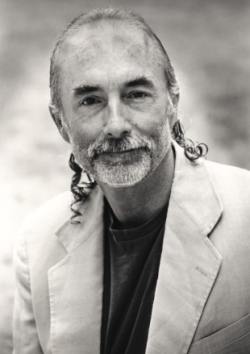
Ten Questions With Hugh Prestwood
February 02 2010
Hugh Prestwood has written hits for artists such as: crystal Gayle, Trisha Yearwood, Jimmy Buffet, Michael Johnson and Randy Travis. Inducted into the hall of Fame in 2006, the award winning songwriter won an Emmy and a NSAI Song of The Year honor for "The Song remembers When" (Trisha Yearwood) in 1993, and BMI's 1990 Country Song of the Year for "Bottom Of Your Heart" (Randy Travis). Hugh Prestwood shares details of his experience as a hit songwriter, and offers advice for aspiring songwriters.
Q: What does it mean to you to be a member of the Songwriter's Hall of Fame?
I could not exaggerate how much that honor means to me. I wouldn't trade it for a closet full of Grammies. The year I was inducted (2006) was the last year the NSF kept the honorees a secret, and I'm convinced my dumbstruck non-speech was the reason. I wish I had been optimistic enough to prepare some remarks ahead of time. I would have tried to express, however inadequately, my profound gratitude. I don't think a day goes by that I don't take great satisfaction in being a member of such an elite club.
Q: How did you get started writing songs?
As a young child listening to the radio, a song would occasionally come along that, with a single first listening, would so move me that I would be up all night longing for the moment I could hear it again. I had also played the guitar since I was ten. Lastly, I had always loved (and occasionally written) poetry. Given these ingredients, I remember – as I got older – wondering why I didn't write songs. Of course, growing up in El Paso, I had never met anyone who wrote songs so I was entirely clueless. Fairly late, about age 25, after I'd finished college and was teaching 6th grade, I got into a cover band (with Karen Taylor Good) and the band decided we should have some original material, so I started writing a few songs. Slowly a whole new universe opened up to me – particularly as I perceived that people responded to the songs. I am entirely self-taught. I never had a minute of instruction on how to write. I just slowly worked my own way out of the wilderness – or almost out.
Q: How did you get your first song recorded?
At age 30, hoping to make something happen with my songs, I moved to NYC, where a good friend from El Paso was on Broadway in a major musical, and she had some connections. I didn't know anyone in Nashville or L.A. After being in NYC a couple of years I met a successful producer – Alan Lorber – who became interested in my songs and, in particular, one called "Dorothy". The song was about what happened to Dorothy after she got back from Oz. At some point Alan sent the song out to Jim Ed Norman in California and he cut it on Jackie De Shannon. I had been in NYC about 3 years by then. It was amazing to hold that album cover and see my name and hear that moving interpretation of my song.About a year later Judy Collins also cut "Dorothy" and Judy was my big break. She got me my first staff-writer job with Charles Koppelman and Marty Bandier's Entertainment Company.
Q: How do you tell a good song from a great one?
While I'm writing a song I tend to swing back and forth between thinking it's amazing and thinking it stinks. When the song is done, I usually have a "honeymoon" phase and am sure it is a masterpiece. After a week or two I get back to the real world and often realize it may not be as grand as I initially believed. But, on some songs the honeymoon doesn't seem to stop, and a deeper belief develops. Something in me just permanently loves certain songs I've written whether or not they ever get cut. I think probably those songs tend to be the ones that went directly from my heart and soul to my guitar and voice – only minimally involving the higher functions of my brain. Of course, I believe you have to first master the craft before you can afford to check your brain at the door of the dark and smoky Tunesville Lounge. I've often thought that the same elements that make for a great song can also make the song hard to get cut, meaning there is something different – perhaps ground-breaking – about the song, and that's what makes it great. That same difference, however, often requires the recording artist to take a risk because it forces him or her out of their normal comfort zone. A lot of artists are risk-averse. Luckily, some are not afraid to stick their necks out – at least once in a while.
Q: What's one lesson you've learned about songwriting that you can pass on to future songwriters?
Probably – lyric wise – not to bullshit, at least not too much. The more I can speak honestly and draw upon real experiences – things I've witnessed – the more likely my lyric will ring true. A little truth underlying the lyric is a very powerful thing. For the song's "spell" to work, the lyric needs to be believable.Along those same lines, I always advise aspiring writers not to forget that they are speaking to other people – not themselves – when they write a song. Bear those people in mind and ask, "Why should Joe Blow and Jane Doe give a damn about what I'm saying?" So I generally try to pick subjects that resonate in me and that I believe will also resonate with the listeners.
Q: Are there any songs that you wish you had written?
Too many to list. Off the top of my head, if I could put my name on any song, it might be "Both Sides Now" or "Over the Rainbow" or "Everything That Glitters" or "Please Come to Boston or "The Frozen Man" or "My Funny Valentine" or a bunch of Johnny Mercer or Jimmy Webb or Hank Williams songs. On my wall, I have a copy of "Sunday Morning Coming Down" hand-written by Kris (Kristofferson). Any songwriter who doesn't wish they'd written that song should find another line of work. It is a permanent monument to the power of economy, simplicity and honesty about the human condition. Kris bared his soul, and Johnny Cash had the guts to bare his in relaying the song to the public.
Q: Where were you when you first heard your first song on the radio?
I was sitting in a car in a New Jersey supermarket parking lot while a girl I was living with was in the store. I heard Crystal (Gayle) singing "The Sound of Goodbye". What a rush! All the concerns I had about glaring flaws in the song instantly evaporated. Emanating from the radio, it was suddenly perfect!
Q: What is the story behind your song "The Song Remembers When?"
I got the idea from an Ann Sexton poem "The Music Swims Back to Me". This elderly woman in the poem hears a radio playing a song and she says: "That song remembers more than I do". I wrote the idea down and about a year later my wife and I were actually "rolling through the Rockies" when we heard "Hard Rock Bottom of Your Heart" for the first time on the radio. I thought to myself that I would always remember that moment – and then I remembered I had this idea at home about the song remembering. So, when we got back I wrote it. As with most of my songs, it took me several days before I was completely happy with it.Alluding to the earlier question about knowing how good a song is, not long after I'd written it I began to believe it was as good a song as I'd ever write, and that if I couldn't get it cut I might as well give up. And . . . it was damn hard to get cut. It bounced around town for at least a year and finally Kathy Mattea cut it and then it got left out of the record. I was devastated. I went into a dark period of struggling with self-doubt. But then – a miracle – Garth Fundis cut it with Trisha (Yearwood) and they nailed it – spectacularly so. As silly as it may sound, when I was sitting in Garth's office and I heard the cut for the first time, I jumped out of my chair and said, "We're in the hall of fame!"
Q: Given everything it has taken to be a successful songwriter, would you do it all over again?
Silly question! If you have the calling – you must follow. When I moved to NYC I had decided that when I was old and grey, I could live with myself knowing I had at least tried – whether or not I succeeded. But I felt I wouldn't be able to live with myself knowing I hadn't given it a shot. Somehow, I just hung in there and Thank God I did. Making a living writing songs is a marvelous way to go.
Q: What advice do you have for up and coming songwriters?
First and foremost, you must love the process of writing songs. My number one goal in writing a song is to blow my own mind, so to speak. Rather than sitting around waiting for some other writer to slay me with some new song – which doesn't happen all that often – my goal is to regularly slay myself. That is THE great payoff in songwriting, regardless of what later happens or does not happen with the song. My wife always says I'm happiest when I'm deeply involved with a song I'm writing. Second, always try to let your gut feelings be the final arbiter in the hundreds of little decisions that go into crafting a song. Anytime my brain and my heart disagree, my heart always wins the argument.Third, regarding what I call the pursuit of excellence, it occurred to me one day that Tiger Woods winning the Masters by 3 strokes is Woods being literally about one percent better than the 2nd place finisher. My point is that often the difference between a good and great song is just those last few percentage points of excellence. I advise writers to set the bar pretty low when they rough out a song, and then raise it very high as they fine-tune it.Finally, should any of these up and coming writers really hit the "Big Time", I urge them to try and work my name into their Grammy acceptance speech.
}"}
Back to Features
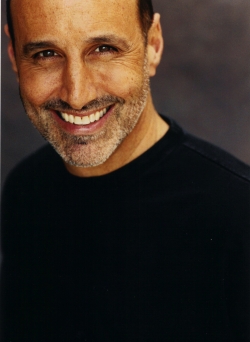
Ten Questions With Mark D. Sanders
July 26 2010
Nashville Songwriters Hall of Fame member Mark D. Sanders shares how he got started, and offers advice to up and coming songwriters.
Q: What does it mean to you to be a member of the Songwriter's Hall of Fame?
When I was a kid, I wanted to be a basketball player and I would imagine hitting the game-winning shot in the championship game and hearing the crowd roar. That's what it feels like, except I'm old and it's songwriting. When I came to town, I'd go to Linebaugh's down on Lower Broad and think about Hank Williams eating there, and now I feel like I could maybe sit at the same table with him--maybe even get him to sign something. Hank, and all the others who have gone before... I'm honored.
Q: How did you get started writing songs?
I started when I was about fifteen years old. I would spend time upstairs in my room with the door closed, listening to the Lovin' Spoonful, trying to figure out the chords to "Younger Girl," and writing poems about what was wrong with my life and what I wanted it to be. When I was in college, some of the poems started turning into songs, though I hadn't yet given up on becoming a poet. Songwriting became a hobby in my twenties, until I was faced with a life decision when I was twenty-nine, after I'd quit enough jobs to realize I didn't fit into the workaday niche. What was I going to be—a poet or songwriter? I figured at least a songwriter has a chance of making a living, and the rest is my personal history.
Q: How did you get your first song recorded?
Jim Viennau had just come on as a songplugger at the old Acuff Rose on Franklin Road, and when he heard my song "A Matter of Wine" he thought it would be good for his pal Mel Tillis, and lo and behold Mel actually cut it.
Q: Where were you when you heard your first song on the radio?
Mel Tillis was on WSM one night, so of course I called in and asked them to play my cut, which they kindly did. I don't remember where I was that time. But the first time I heard one of my songs on the Top 40 Countdown, I was driving a tour bus full of people who wanted to see the homes of the stars and all. When it started playing, I picked up my mic and said "Folks, I wrote this song." Silence. Disbelief. "Hey driver, where does Dolly Parton live?"
Q: How do you tell a good song from a great one?
I prefer to tell it quietly and firmly. No, seriously, it feels like there's something innate that recognizes crowning achievements, like when a writer has pulled off "The Song Remembers When," or "I Can't Make You Love Me," or "From a Distance." Right away I get very jealous and wish (see three questions down)…
Q: What was your inspiration for "I Hope You Dance?"
Tia Sillers was going through a divorce and had received some motherly counseling that we expanded into a song. I have kids of my own, and I knew what I wanted for them, so that helped a lot. I liked the concept of saying "I HOPE you" as opposed to "I WANT you to" or "You BETTER," in other words, not offering advice or ultimatums. In a way, the song is as much about the singer as it is about the person to whom she's singing.
Q: What's one lesson you've learned about songwriting that you can pass on to future songwriters?
I learned a long time ago that the way I might feel about my career on any one particular day is almost never a true reflection of my actual career, and that has allowed me to muddle through the dark days, somehow.
Q: Are there any songs that you wish you had written?
See above, and "One of Us" and "Lord I Hope This Day is Good" and "Louisiana Saturday Night" and on and on.
Q: Given everything it has taken to be a successful songwriter, would you do it all over again?
I'd do it all again in a heartbeat, only I'd come to town when I was twenty-three, instead of twenty-nine. This is the greatest career ever for those who find success.
Q: What advice do you have for up and coming songwriters?
Read, please. Live, please. Write what you know, please. Make it mean something to you, please. Please yourself.
}"}
Back to Features
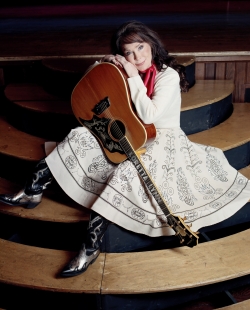
Loretta Lynn Celebrates 50 Years in Entertainment: The Nashville Songwriters Hall of Fame Interview
May 02 2011
Loretta shares how she got started in the business, the secret to a long career, her advice for songwriters and what she thinks of country music today.
After receiving the Grammy Lifetime Achievement Award, the ACM Pioneer Award, induction into the Country Music Hall of Fame, CMA Entertainer of the Year (first woman ever named), membership in the Grand Ole Opry, earning 16 #1 songs and 51 top 10 hits, Loretta Lynn, first and foremost, considers herself a songwriter. Inducted in to the Nashville Songwriters Hall of Fame in 1983, Loretta is embarking on her 51st year in entertainment: writing with today's newest stars, working on three new albums, and touring.
She took time out of her busy schedule to share with the Nashville Songwriters Hall of Fame about how she got started in the business, the secret to a long career, her advice for songwriters and what she thinks of country music today.
Q: Congratulations on the celebration of 50 years in your career. It is a truly amazing milestone that not many artists reach.
Loretta Lynn (LL): I can't believe that I've lasted that long. [laughs] If somebody had said that when I started singing, I would have said no way, I won't be singing fifty years from now. 'Cause I had four kids in school, when I started singing. I think I was 26, when I started singing. I'd never sung out in public.
Q: To what do you attribute your career longevity?
LL: Hard work. You either work at it, or you get out of the business. I think as long as you work at it, you stay in the business. And that's the only thing I know, it's just hard work. And I like to work. I think if you're too lazy to work than you're not gonna' make it.
Q: After all your success and awards, what surprises you these days?
LL: Getting another award! [laughs] It seems to me like they just sneak up on me, you know?
Q: What does it mean to you to be a member of the Nashville Songwriters Hall of Fame?
LL: Oh, well I'd rather be a songwriter than a singer. I love to write songs, and I'd rather write than sing. Anytime!
I think when you're writing, you're getting rid of all the frustrations, and everything else you have in you. You know? And you put it on paper. Where do you think, "Fist City," "You Ain't Woman Enough To Take My Man," and "Don't You Come Home A Drinkin'" and all those other songs came from? They didn't just come from me, I was livin' em.
Q: How did you get started writing songs?
LL: You know I tried to write before I ever did, and I thought "I don't know how to write." So Doo had brought a songbook home, and I looked at that songbook and I thought, "Gee wiz, there's nothing to writin' a song." You just write like you're writing a poem. So I sat down and did my first song "Honkey Tonk Girl" that I had out on Zero (records). It hit the top ten and nobody could get the record, you know. There was no way people could get 'em cause nobody had 'em out there for sale. But it still got in the charts, and I thought that was great.
Q: Describe your writing process. Lyrics first, melody first?
LL: I start right out with two or three lines and the melody right with it. It all comes together for me. I know whether it's gonna' be like a (sings) "You ain't woman enough to take my man" or it's gonna be a waltz. I can tell from the way I start 'em out.
Q: Do you write with an instrument?
LL: My guitar. If you know three chords, you can write a song. A, D and G, I believe are probably my favorite chords. [laughs]
Q: Do you prefer to write by yourself or co-write?
LL: Sometimes I like to write by myself. If I've got something to say, that I don't want nobody else in on. It's like it's a secret, you know, but you're writing a song about it. And you put it out, knowing it's not gonna' be a secret anymore, but while you're writing it, you think "oh, it's so secretive." Such a secret, and here I am putting it out in a song, but that's the way it goes. [laughs] I think a writer probably tells a lot about themselves and no one ever knows. No one ever knows what part of you, that you are writing about.
I do co-write too though. I'm going to be writing with Miranda Lambert soon, and I've been writing with Shawn Camp.
Q: Your songs are relevant with every generation. Do you focus on writing songs on timeless subjects?
LL: I think I try to write about what's going on today. How you feel today, and how people are living today. I think that's a good way to write a song, because if you write one and it's so old-fashioned, it's not gonna' fit the girls today. It's gotta' be something that can fit them. Like "You Ain't Woman Enough To Take My Man," that happens every day, and it'll be that way 'til we die. I have to look at it that way.
Q: What inspires your writing?
LL: Well used to, when my husband was still living, he inspired most of them. [laughs] Yeah, I'd have to say he, well…he made me a good songwriter. Today, I just think back and write one, but it's not as easy today as it was back then. But of course I just can try. Because whatever was going on back then, is still going on today.
Q: How do you tell a good song from a great one?
LL: You know, I can tell a good song after I get it written. I can tell whether it's going to be any good, or if it's just a mediocre song that maybe somebody will just put in an album for a filler and somethin' like that. But I can tell a hit song the first time I hear it.
When I was writing, "You Ain't Woman Enough To Take My Man," I was singing it to Patsy Cline. Patsy said, "Loretta, that's gonna' be a damn hit when you get it finished." And at the time, you know I thought, "well when am I going to get this thing finished?" cause we'd just moved back here. I was having a hard time finding a place to live with four kids, in school. I had four kids in school by the time I was 21.
Q: Wow.
LL: [laughs] That's what I said! This has got to stop. Then I had twins and I said, "Oh my God, then next one will be a litter, sure in the world." So I told Doo, "You better go do something." It was easier for him than it was me. So Patsy sent her old man too. While Doo was in the doctor's office, Charlie ran, and Patsy sent him right back. It was funny. It was really funny. So Charlie Dick and Doolittle both did it. [laughs]
Q: What is your favorite song that you have written?
LL: After Patsy had passed away, I wrote "This Haunted House" over at her house. I think maybe that one means a lot to me. Well, I should say that my favorite song that I've ever written was "Coal Miner's Daughter."
Q: What's one lesson you've learned about songwriting that you can pass on to future songwriters?
LL: Keep it real. That simple, Just keep it real.
Q: Are there any songs that you wish you had written?
LL: "Today I Started Lovin' You Again" is my favorite all-time song. Merle Haggard wrote it, and it's just so easy (sings) "Today I started loving you again." It's an easy song to write, not complicated at all.
Q: What advice do you have for other artists and songwriters?
LL: Well, I think every writer has to figure out in their own mind exactly what they're doing. And I think that they will. A songwriter will. If they keep it like it should be, make it commercial, I think they will have a hit song. But it has to be commercial.
Q: What do you think of Top 40 commercial country these days?
LL: Well, I think some of them are good and some of them are just too light. They're not heavy. And a lot of them are just too light. But it's nice. I think we ought to keep moving on. I don't think we ought to just stay back there with a guitar and a steel. I think that the music is great today. I really like it.
Q: Who are some of your favorite artists these days?
LL: Carrie Underwood. I think she's great.
Q: Anyone you haven't worked with yet that you would like to record or write with?
LL: Alan Jackson. I love Alan. He's a great artist.
Q: What is next for Loretta Lynn?
LL: Well, I've got three new albums recorded: a religious album, a Christmas album, and an album with some new stuff I've written. You'll be hearing them this year!
I'll be touring too. This summer we've really got a busy schedule. I could work every day if I wanted to. I could! And I love Texas and Oklahoma. They are my favorite states to work. The people there really love country music, and they deserve it too. All them cowboys, they work hard! Or oil riggers or whatever you want to call them. All the men in Texas work hard!
Q: There's your next song!
LL: Somewhere in there…[laughs]
}"}
Back to Features
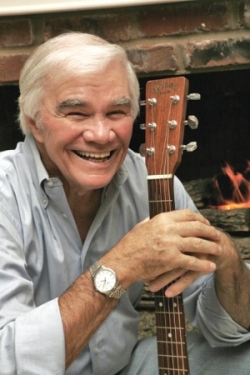
Ten Questions With Dickey Lee
August 16 2011
Recently, there has been renewed interest in the songs of Dickey Lee with the emergence of the TNT hit show, "Memphis Beat." Lee co-wrote the theme, which was originally recorded by Jerry Lee Lewis.
Dickey Lee looks back on over 50 years in the music business
Memphis-born singer/songwriter Dickey Lee has had a stellar career that spans 5 1/2 decades. Just barely out of high school, he had his first hit in 1957 with "Dream Boy." In addition to his own recording career, he has enjoyed great success as a writer. His songs have been recorded by legends such as Elvis Presley, James Taylor, Waylon Jennings, Jerry Lee Lewis, and Ray Charles, just to name a few. George Jones was the first to record the classic, "She Thinks I Still Care."
Recently, there has been renewed interest in the songs of Dickey Lee with the emergence of the TNT hit show, "Memphis Beat." Lee co-wrote the theme, which was originally recorded by Jerry Lee Lewis. "You know, it's amazing," says Lee. "You write a song in the early sixties, and it's the theme of a TV show in 2011!" In this interview, Lee talks about how he got his start in Memphis, the importance of titles, and how patience is a necessary virtue for songwriters.
1. What does it mean to you to be in the Nashville Songwriters Hall of Fame?
Dickey Lee: Oh, it was fantastic. I never expected it. I didn't even expect it at the dinner. A friend of mine said, "You better get your speech ready." I said, "I don't have a speech." (Laughs.) I said, "I don't deserve this, but I'll take it." It was really great!
2. How did you get started writing songs?
Dickey Lee: I started in junior high school. There was a guy in high school who was a songwriter. He was like a high school hero, you know? He played guitar and sang. He was the captain of the football team. I emulated this guy. I went out and bought my first guitar at a pawn shop. I think it was eight dollars. Then I just started writing songs.
3. How did you get your first song recorded?
Dickey Lee: Oh, gosh! Well, the first song I got recorded, I recorded it. I'm from Memphis. I graduated from high school in 1955. There was a really hot disc jockey in Memphis called Dewey Phillips. He had a show from 9-12, six nights a week called 'Red, Hot, & Blue.' All the kids in town just loved him. For some crazy reason, I just went up there one night. I got myself in and got to talk to him. I asked him if he would listen to a couple songs. He agreed. He said, "Those are pretty good. Why don't you get a group together and come back?" Much to his surprise, I did. (Laughs.) We eventually recorded them right in the radio studio. He found this little label called Tampa Records. It was out of L.A. We put the record out, with two songs that I'd written, "Dream Boy" and "Stay True, Baby." They were mid-south hits. Then, after that, I signed with Sun Records. I had a few hits on Sun, which were also mid-south hits. Then, I had my first national hit on Smash Records which was "Patches." That was my first number one record.
4. Tell me the story behind writing "She Thinks I Still Care."
Dickey Lee: There was a girl that I was really crazy about when I was going to college. I wrote the song about her. She dumped me! We're friends today, actually. I just wrote it about this girl.
5. Where does the inspiration for your songs come from?
Dickey Lee: I'm always looking for titles. I can't do anything without a title. I've tried before and I write myself into a corner. That's basically where I start. I've had some great co-writers too. It's usually the same process whether I'm on my own or with a co-writer. Maybe I'll start off trying to come up with a chorus or a verse, but the title will take me somewhere. I'll just start singing crazy melodies. That's why you like to be alone or with people that you really know because we'll just start throwing stuff against the wall, you know? Then, you say, "Yeah, I like that."
6. Is there a song that someone else wrote that you wish you had written?
Dickey Lee: About a million of The Beatles' songs! (Laughs.)
7. How do you tell a good song from a great one? Do you know when it's going to be successful?
Dickey Lee: Boy, that's really hard. I'm not sure how you define great against good. There's so many hits. I think, today, marketing has so much to do with it. I think, back when I started, usually a good song would get cut. I don't think that's true today. Good songs do get cut today but, boy, there are a lot of songs that don't make it.
8. Where were you when you first heard one of your songs on the radio? Do you remember that moment?
Dickey Lee: Yeah. It was "Dream Boy." I was at a drive-in movie, with a buddy of mine. We went to see some thriller or something. I had the radio on and my song came on. Boy, it was like magic! It's still good when you hear one of your songs. I mean, it's not that same magic feeling but you're thinking, "Somebody's playing me! Thank goodness!" The other side of "Dream Boy" was a song called "Stay True, Baby." It was almost as popular. As it went up the charts, they listed both sides. I remember the first time I ever played in Germany. It was 1985. I played at this amphitheater over there. I went out and before I started playing, this voice comes out of the audience, "Stay True, Baby!" I'm thinking, "Gosh, I don't even remember that song!" It was amazing!
9. What advice would you give to someone who wants to be a professional songwriter?
Dickey Lee: I would say two things: Don't be discouraged and patience. When I started, it was not nearly as hard as it is compared to now. I just had a dream. I grew up on a farm, which I could hardly wait to get off of. This was something I wanted to do and I envisioned myself doing it. I just believed that it was going to happen. It was just something I loved to do. I love to sing. I love to write. It was just fun, you know?
10. Looking back on all that it took for you to becoming a successful songwriter, would you do it again?
Dickey Lee: Yeah. Although, if I was starting out now, it would probably be a lot more scary. I was never scared back then. I never thought about the odds that were against me. I think I would think about that a little bit today. It's a different time. It's a different culture. People are different. They think different. I think you just do what you gotta do. I still say to do it, you gotta believe. You gotta have patience. A lot of people are going to tell you you're not going to make it. I remember my daddy told me I ought to take my guitar and throw it in the Mississippi River and get a job. (Laughs.) A lot of kids have family that encouraged them, you know? But my family all loved it when I got it going.
}"}
Back to Features
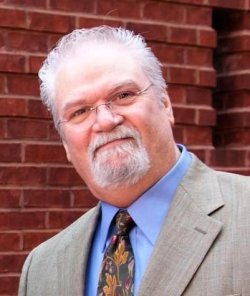
Ten Questions With Roger Murrah
October 13 2011
With hit songs spanning four decades and dozens of airplay and achievement awards, Roger Murrah is one of Nashville's most prolific songwriters and successful independent music publishers.
Q: What does it mean to you to be a member of the Songwriter's Hall of Fame?
It's an honor to be recognised by my fellow-professional songwriters and counted worthy to be listed among those on whose shoulders an industry was built.
Q: How did you get started writing songs?
My dad traded a pick-up truck for an old upright acoustic piano, when I was around 12 years old. I slowly learned how to play it, one note at a time. Then I started putting chords together, but never became proficient enough to keep the melodies of my songs from being simple, which turned out to be a blessing for my songwriting. Through the years, I've written most of my songs on a Wurlitzer electric piano, one of the best instruments (in my opinion) for writing, because it's melodic and percussive.
Q: How did you get your first song recorded?
Someone (I wish I knew who) pitched my first song that was recorded to Bobby Hardin of the Hardin Trio, which he ended up recording and releasing. Unfortunately, it kind of started off slow and tapered off in the charts, but it was very important to me and I'm still thankful to Bobby for recording it. A quick anecdote about that song... it's original title was "Just Because He Loved Her Before I Loved Her Don't Mean She'll Love Him Again". Needless to say, Bobby asked if I could shortin' the title, which I was glad to do. I obviously still had a lot to learn.
Q: Where does the inspiration come for your songs?
Life stories; quotes from people; words said uniquely; quirky thoughts; turns of phrases; inspiration from songs or movies that move me emotionally; strong titles; conversations and I'm pitched good ideas from co-writers as well.
Q: How do you tell a good song from a great one?
Well, I'm always telling my songwriter friends that our goal should be to write an exceptional song every time. But, unfortunately, we all have to write the other ones out of our systems sometimes, so we can hopefully have an occasional exceptional song come along. Usually with those, there's not a lot of argument about them from anyone who has been doing this for awhile. However, it's the "good" songs that confuse the most people. That's when you can run-the-gambit on opinions.
Q: What's one lesson you've learned about songwriting that you can pass on to future songwriters?
It's usually always better for your song, when you use "true" rhymes, ESPECIALLY setting up the hook or title. That's the one thing I notice most with a lot of young writers today, they don't respect the rhyme enough.
Q: Are there any songs that you wish you had written?
"Where Were You (When The World Stop Turning)". When Alan (Jackson) wrote that song, he gained my complete respect as a songwriter. It's American literature. "Good Ole Boys Like Me", written by one of our very best, Bob McDill. And of course, this song would also rank as literature of the American South.
Q: Do you have a special memory of hearing one of your songs?
Hearing "We're In This Love Together" in an elevator in Paris was pretty special for a country boy.
Q: Given everything it has taken to be a successful songwriter, would you do it all over again?
Yes
Q: What advice do you have for up and coming songwriters?
Believe in yourself, but don't be so quick to discount constructive criticism from a professional that you feel like you can trust.
}"}
Back to Features
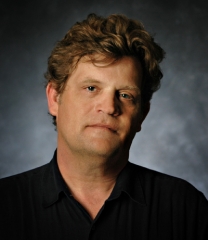
Ten Questions With Thom Schuyler
April 25 2012
Thom Schuyler's songwriting credits include “I Don’t Know Where To Start” (Eddie Rabbitt), “Years After You” (John Conlee) and “Love Out Loud” (Earl Thomas Conley). His “Point of Light” (Randy Travis) was the theme song for President George H.W. Bush’s volunteerism campaign. “ 16th Avenue ” (Lacy J. Dalton) is the unofficial anthem of Music Row’s songwriting community.
Q: What does it mean to you to be a member of the Songwriter’s Hall of Fame?
Frankly, it still hasn’t sunk in and probably never will. It means a great deal to me on many levels and for many reasons but it is difficult to articulate. Certainly there is no small portion of joy that emanates from the validation of one’s peers. And there is surely a portion of fulfillment knowing that those long and lonely songwriter hours added up to a modest bit of work that some people enjoyed. Most of all it’s a singular honor to have been given a seat at the table. Given the genuine respect and admiration I have for those who were, most appropriately, seated before me, I think I’ll just keep my mouth shut and listen!
Q: How did you get started writing songs?
My story is a common one, I suppose; boring, actually. When you’re raised in a small Baptist church you become mesmerized by that rich, simple and, for the most part, very American body of church hymns composed post-Civil War through the 1920’s. Those melodies and that very deliberate lyrical meter got into my head, my heart and my soul. As I entered my teen years the music of the 60’s began mingling with those Fanny J. Crosby tunes and by the time I was 19 or so, I was hooked. Anyone who has ever heard one of my songs can easily detect my very basic influences. Really, I never progressed as a composer beyond those fundamental elements.
Q: How did you get your first song recorded?
Well, I don’t really know. The first songwriter I met in Nashville (in 1978) was Stewart Harris. “A friend of a friend” had given me his name and suggested I look him up when I got to town. Stewart was writing for Jerry Reed and was very kind and gracious to me. He and I began “co-writing,” a very foreign concept to me. A few months later another fine fellow joined Stewart and I one day to collaborate on a tune: Keith Stegall. We wrote a song called “Hurricane” and a few months after that Stewart and Keith called me to say it had been recorded by an artist on RCA. It went to #1 on Billboard. That was crazy.
Q: Where does the inspiration come for your songs?
“Here, There and Everywhere,” I suppose. From my limited periscope I have perceived that I’ve written 3 types of songs: boring, boring and a handful that have some merit. In my early years in Nashville I searched and longed for a good, functional title and then banged away at it until I removed all the complication from the story. Other times I’ve been moved by an event, a person or a memory and have attempted to get to its essence. Most of the time I’ve wasted hours, weeks, months and years trying to make something worthy out of something that has no worth.
Q: How do you tell a good song from a great one?
Truth, tears, melody and rhythm.
Q: What’s one lesson you’ve learned about songwriting that you can pass on to future songwriters?
It’s a job, it’s a profession and it’s hard work. It also beats the hell out of roofing, which is what I was doing before that “Hurricane” incident I described above.
Q: Are there any songs that you wish you had written?
Hundreds, thousands... “The Boxer” (Paul Simon), “Marie” (Randy Newman), “On the Street Where You Live” (Lerner and Loewe), “Chiseled in Stone” (Barnes & Gosdin), “Oh Girl” (Eugene Record), “Telling Me Lies” (Thompson/Cook), “Galveston” (Jimmy Webb), “Long Black Veil” (Wilkin/Dill), “The Old Rugged Cross” (George Bennard)…
Q: Where were you when you first heard your first song on the radio?
Decking a roof at 1214 16th Avenue South — the soon-to-be-offices of DebDave/Briarpatch Music Publishing.
Q: Given everything it has taken to be a successful songwriter, would you do it all over again?
Twice, at least.
Q: What advice do you have for up and coming songwriters?
Take care of those you love, those that love you and others, too.
}"}
Back to Features
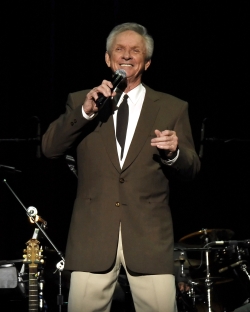
Ten Questions With Mel Tillis
July 18 2012
Mel Tillis is a true Renaissance man - a songwriter, recording artist, film and television actor, painter and humanitarian. Inducted into the Nashville Songwriters Hall of Fame in 1976, his career has spanned more than six decades.
Q: What does it mean to you to be a member of the Songwriter's Hall of Fame?
I feel extremely honored to be in such good company.
Q: How did you get started writing songs?
In 1956, Wesley Rose told me on my first trip to Nashville that I needed to try and write songs if I expected to make it in Nashville. He told me I sang well, but the stuttering may hold you back. So I gave it a try!
Q: How did you get your first song recorded?
I was just out of the Air Force and was working as a fireman for the Atlantic Coastline Railroad. I went to see Ray Price at a venue in Tampa and through a friend of Ray's, I got to meet the singer. I sang, "I'm Tired" to him, and he liked it well enough to take it back to Nashville.
Q: Where does the inspiration come for your songs?
Wherever my mind takes me.
Q: How do you tell a good song from a great one?
There's no formula for good vs. great. Depends on the listener. For me, it's whether I like it or not.
Q: What's one lesson you've learned about songwriting that you can pass on to future songwriters?
How enjoyable it is to create a little jewel and be honored by the fans, the media and your peers.
Q: Are there any songs that you wish you had written?
Yes, "Wind Beneath My Wings." What a great song. Congratulations to the writers, Jeff Silbar and Larry Henley.
Q: Where were you when you heard your first song on the radio?
While still living in Florida and working as a fireman on the railroad, I would listen to Eddy Hill on WSM most every night while waiting to go to sleep. He played my first song recorded by Webb Pierce, "I'm Tired." (#2 on Billboard)
Q: Given everything it has taken to be a successful songwriter, would you do it all over again?
In a heartbeat.
Q: What advice do you have for up and coming songwriters?
Burl Ive's once told me, "If you want to be a songwriter or novelist, take time to sit down and write one hour a day. At the end of the year from the day you started, you would have 360 days of experience. How true.
For more on Mel Tillis, visit his website: www.meltillis.com
}"}
Back to Features

Ten Questions With Kris Kristofferson
January 09 2013
Kris Kristofferson's talents are as far-reaching as his impact on the musical landscape. Among his classic songs that have influenced generations of artists and music lovers are "Me and Bobby McGee," "Help Me Make It Through the Night," and "Sunday Morning Coming Down."
Q: What does it mean to be a member of the Songwriter's Hall of Fame?
One more piece of the Dream of my life coming true.
Q: How did you get started writing songs?
When I was eleven I wrote a song called, "I Hate Your Ugly Face." They have been coming to me ever since.
Q: How did you get your first song recorded?
Persistence. I worked almost two years as a janitor at Columbia Recording Studios and flying helicopters off shore on the Gulf of Mexico, then finally got "Jody and the Kid" cut.
Q: Where does the inspiration come for you songs?
From everywhere. Everything you experience can inspire a creative expression.
Q: How do you tell a good song from a great one?
By how good it makes you feel for how long.
Q: What's one lesson you've learned about songwriting that you can pass on to future songwriters?
If you're in it for the love, the money doesn't matter. Life's too precious to be wasted on anything but love.
Q: Are there any songs that you wish you had written?
There are many songs I love, and I love the ones who wrote them.
Q: Where were you when you first heard your first song on the radio?
Brownsville, Texas. Mexican music… oh, you mean my song. Nashville, "From the Bottle to the Bottom," by Faron Young, At Tootsie's Orchid Lounge.
Q: Given everything it has taken to be a successful songwriter, would you do it all over again?
You're kidding, right?
Q: What advice do you have for up and coming songwriters?<
Hang out with songwriters you respect and admire.
}"}
Back to Features
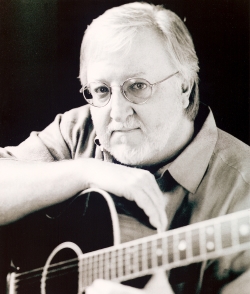
Ten Questions With Pat Alger
March 08 2013
Pat Alger started writing songs and performing at Atlanta folk clubs. Moving to Woodstock, N.Y. in the '70s, he made three albums with the Woodstock Mountain Revue for Rounder Records and a duet album with guitarist Artie Traum. Pat had his first hit with Folk-Pop artist Livingston Taylor ("First Time Love") in 1980, then decided to move to Nashville.
Q: What does it mean to you to be a member of the Songwriter's Hall of Fame?
Being elected to the NaSHOF has been the ultimate lesson in humility. I moved here in 1981 with the dream of simply making a living as a professional songwriter. Early on I went to a songwriter show featuring Harlan Howard and Hank Cochran – I remember sitting there awestruck, as they sang song after song that I loved, slowly turning my hopes to despair - I couldn't imagine what it was going to take to someday be in their shoes. As the years have gone by, I've had many young writers come up to say hello with that same look of admiration and bewilderment after I had just played my own string of hits. It becomes easy to appreciate how connected we songwriters are on every level.
Whatever success I've enjoyed has been the result of an ongoing collaboration with incredibly talented songwriters, musicians and singers – many of whom believed in me even when I didn't believe in myself. Many of them were generous enough to assure me in the years when I was struggling that it wouldn't always be that way. I am happy to say that my relationships in the music business have luckily been very positive. That all said, some of my favorite songwriters whose talents I hold in high regard aren't in the Hall of Fame YET – I hope to be there cheering them on some day when they have this special opportunity to put their own careers in sharp perspective.
Q: How did you get started writing songs?
Growing up in the small town of LaGrange, Georgia, I was surrounded by all kinds of music. My mother had 6 brothers and sisters and everyone sang or played an instrument – her twin brothers played guitar and mandolin and they taught me the chords to the Everly Brothers' hit Cathy's Clown. With those 4 chords I started writing simple folky songs (this was in the 60's when folk music was having a commercial renaissance) about my own teenage heartaches. I found some like-minded people who enjoyed singing and we started playing at churches and local events. I just seemed to have a knack for it – I was always the guy who did the parody for the school program or summer camp show.
Q: How did you get your first song recorded?
I was playing in a duo with my dear friend and legendary folk singer Artie Traum and we were the opening act at aconcert in West Chester, PA in 1979. The headliner was Livingston Taylor, James Taylor's younger brother, and as we were warming up in the dressing room Taylor stuck his head in and asked about the song we were playing. It happened to be a song I had written and he asked me to send him a copy – he was looking for one more song to finish off an album he was recording. When I got home I recorded 3 songs into a boom box cassette player – a really terrible sounding recording – and sent it to him. He couldn't have cared less about the quality of the tape - he was looking for songs! He ended up recording 2 of those songs and both were hits. I was an accidental genius.
Q: Where does the inspiration come for your songs?
If I knew the answer to that I'd go to that place every morning and get me some. But to try to answer the question - I guess inspiration has always come from perspiration and persistence – putting in the time day after day until something worth saying comes out of your mouth and onto the page. Like most writers that I know, I am a diligent observer of the world around me, and I have found that real life is much more interesting than anything I could make up. As for the music, I was blessed with a natural talent that I have worked very hard to develop by performing and practicing for the last 45 years or so.
Q: How do you tell a good song from a great one?
These are tough questions! I have lost track of how many songs I have written over my career – I literally have no idea how many – but I know that most of them are merely good at best. It seems as though a great one comes along about one out of a hundred times and it sticks out like a redheaded girl at an Italian wedding.
Q: What's one lesson you've learned about songwriting that you can pass on to future songwriters?
I don't know how many times I said in my early career "this is the best song I can write" – only to look back on it years later and see all the flaws in it – so I always say don't fall in love with your songs. Go write some more and then after that write some more. Have a good attitude – as my friend Harlan Howard used to say: "Nobody sent for you". Don't be afraid to ask for help and try to accept all advice for what it's worth – it's free after all.
Q: Are there any songs that you wish you had written?
Too many to list, but here's a sample – "Galveston" by Jimmy Webb; "The Dance" by Tony Arata; "Busted" by Harlan Howard; "Dreaming My Dreams" by Allen Reynolds; "Love Hurts" by Beaudleaux and Felice Bryant; "Leavin' Louisiana In The Broad Daylight" by Rodney Crowell and Donivan Cowart - and I am just getting started.
Q: Where were you when you first heard your first song on the radio?
I had heard a couple of my songs recorded live on some small local New York stations in the late seventies but the first time I heard one on a big "Pop" station was in the spring of 1980. I was driving down towards Asheville, North Carolina in a 1964 Volvo with about 150,000 miles on it having just 'thrown in the towel' in New York City. I was looking for a fresh start – I really didn't know where I was going to land. It was on some interstate late at night, my little AM radio blasting mostly static, when I heard the intro to my song "First Time Love" from the Livingston Taylor album – he really had recorded it. Later that month I heard the song on Kasey Kasem's American Top 40 countdown and Livingston also performed it on the old "Dick Clark's American Bandstand" TV show. I didn't really feel like a professional songwriter yet, but it gave me a calling card and a little songwriter "mailbox money". After a brief stop in Asheville and then Atlanta I ended up here in Nashville on Ashwood Ave. in the summer of 1981.
Q: Given everything it has taken to be a successful songwriter, would you do it all over again?
This the easiest question so far. I didn't know I was going to be successful – I just knew I wanted to write songs and wanted to be a better songwriter. Along the way I met so many unique and interesting people and I can't imagine my life without them – so hell yes I'd do all over again just to have those people in my life.
Q: What advice do you have for up and coming songwriters?
This is the hardest question. The future of songwriting as a profession is somewhat obscured by the fog of innovation and easy access. There is a tendency for people to embrace the latest technology as if it were art itself. I once had the goal of writing a dozen hits that I could always count on to pay my bills, while I tried, like everyone else, to write another one. I accomplished that and more - but the income stream that I based my career on has all but disappeared and the real question is: what is the future value of a song as a musical copyright? The passion behind creativity is difficult to suppress – so I suspect those of the next generation of Hall of Famers will write like I did - because they can't help it. And that is the best advice I can give them: write because it's who you are not just what you do. Hopefully the world will rise up and realize that music is one of the necessities of life itself and compensate us accordingly.
}"}
Back to Features
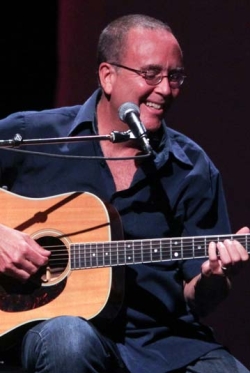
Ten Questions With Tony Arata
August 08 2013
Tony Arata was born in Savannah, Georgia and grew up on nearby Tybee Island. While studying for a journalism degree from Georgia Southern University, he began performing his original songs in local bands. In 1986, he and wife Jaymi moved to Nashville where his unique, soulful style began to get the attention of people like Allen Reynolds and Garth Brooks.
Q: What does it mean to you to be a member of the Songwriter's Hall of Fame?
I don't think there is anyone who ever picks up a pen, or a guitar, or sits at a piano or behind a kit of drums that doesn't dream of one day sharing company with their heroes. Our dreams are what keep us going. You never really expect it to happen, but you dream just the same. I stand in awe of those who have gone before me into this hall and always will. So to be, in some capacity, in the company of such legends as those who occupy the Hall of Fame, is beyond an honor. To have had the opportunity to share the evening of the induction with my wife Jaymi and my daughters Katie and Allison will always be, in every since, a sweet memory.
Q: How did you get started writing songs?
I was the baby of the family, so I was left at home when my older sisters and brother moved on to college or got married. They left behind a wonderful album collection; plus my folks were big into music – so I was exposed to everything - from the Big Band era, Nat Cole, the Stones, Beatles, Otis Redding, Little Richard – you name it. The more I listened and the more time I spent reading the liner notes I realized that these songs had to come from somewhere – and not always from the person singing them. I came to the conclusion that writing was the one aspect of music that you didn't need approval for or permission to do. My brother
gave me his old acoustic guitar when I was in the 10th grade and I guess you could say that was when my pursuits began. And I probably would be writing to this day even if no one had ever heard any of my songs.
Q: How did you get your first song recorded?
I played a club in Atlanta with my band and a friend from Georgia Southern (my alma mater) came out to see me. He was dating a girl who worked for an independent record company in Atlanta called Noble Vision. The young lady said that if I wanted to give her a cassette (that shows how old I am!), she would pass it along to her boss who was producing Jim Glaser's first solo album. I did and about a week later I got a call about a song I had included on this tape called "Pretend". I was asked to come to Atlanta and meet with the staff. At that meeting I took another tape which included "Man In the Mirror" and "Stand By The Road." I wound up with all three on Jim's first album. By the way, I saw Jim at the Ford Theater several months ago, and he's still singing like nobody's business.
Q: Where does the inspiration come for your songs?
I am always working on something whether I am with my guitar or not. You keep your eyes and ears open and try and report on what you experience.
Q: How do you tell a good song from a great one?
I've always believed that good songs have all the right elements. Great songs have these, too, and something else – a connection that relays to the listener a story they already know – something they have already lived through – but they're told this age-old story in a way they've never heard. And they can't wait to hear it again.
Q: What's one lesson you've learned about songwriting that you can pass on to future songwriters?
To enjoy the process of writing, I think is all-important. There are so many forces arrayed against you once you write a song – getting it heard, getting it placed, getting it cut, getting it released – these are all things over which you have very little, if any, control. You can't say where a song will end up. But you have complete control over where a song starts.
Q: Are there any songs that you wish you had written?
We don't have time for a complete answer to this question! I will only say that my favorite of all time is "They Can't Take That Away From Me" by George and Ira Gershwin. As the song so beautifully relates, our memories are everything.
Q: Where were you when you first heard your first song on the radio?
I was driving down to my folks' house on Tybee Island, Ga. I had just crested the Lazaretto Creek Bridge and I was riding with my Jaymi, when "The Man In The Mirror" came on. It was Jim's third single off of his album by the same name. It was a moment.
Q: Given everything it has taken to be a successful songwriter, would you do it all over again?
When you're basically unqualified to do anything else, it hardly takes courage to say, "yes!" I have met the best souls I could have ever hoped to by virtue of choosing this profession. If nothing else had ever happened but to have met all the good people I have through song, it would have been worth it.
Q: What advice do you have for up and coming songwriters?
I will quote the great Dave Loggins: "Write something you're proud of."